

Actually Mr. President, You Screwed It Up
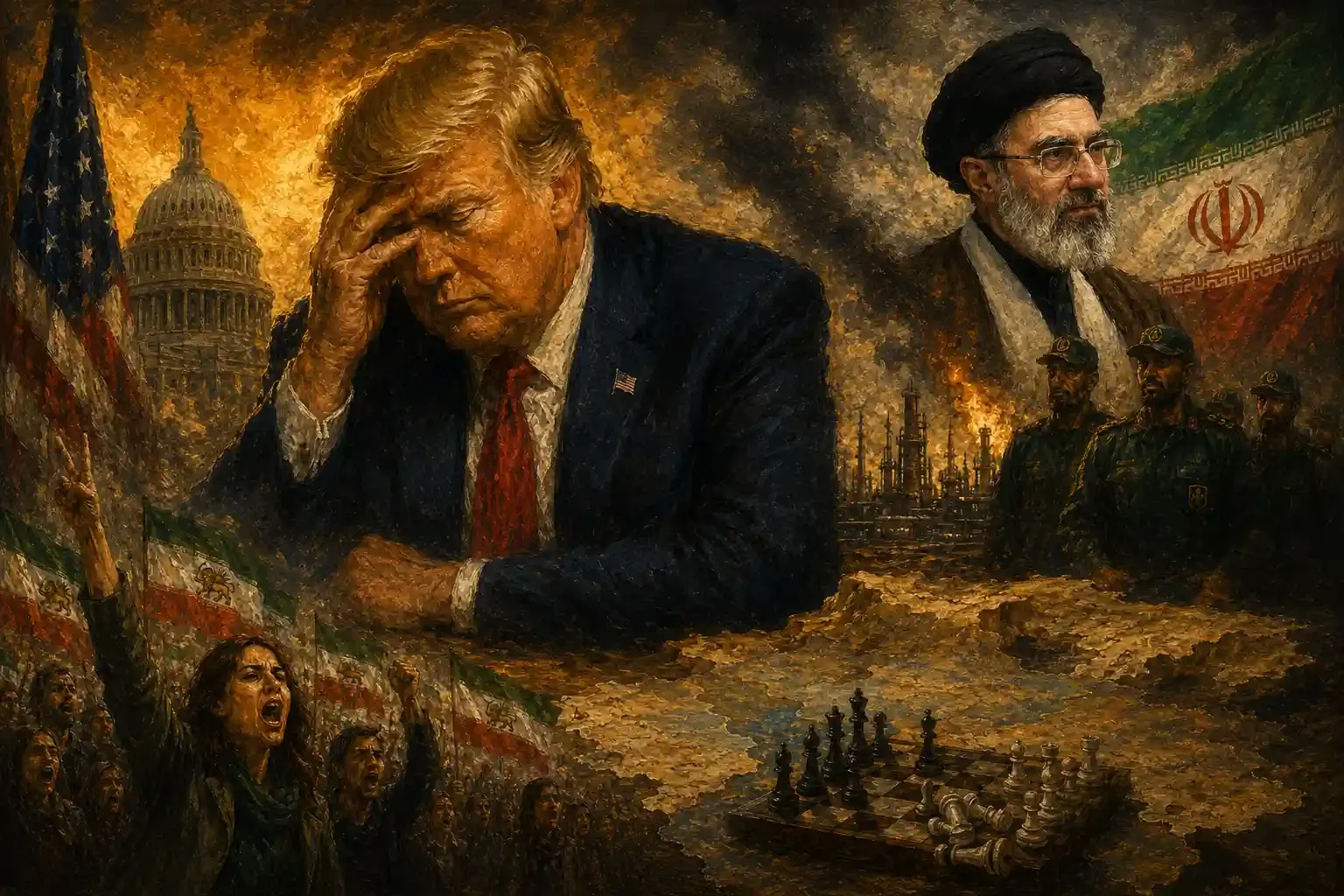
Trump running his mouth off at Netanyahu is probably justified, but the US president is really at fault for the disastrous intervention against the Iranian regime.
No love is lost between me and the Israeli premier Benjamin Netanyahu, but the US president's frustration at Israel's continued action in Lebanon should be more directed at himself. The White House's timidity and miscalculation over what an altercation with Iran would actually require has ensured that the Iranian regime—though badly wounded—can continue on and rebuild. With the endeavor of balancing out the political situation at home over his own divided camp, Trump has handed a pointless, long-term victory to the Islamist regime that will now entrench itself even more.
There was genuine hope at the beginning of this year that the violent regime of the mullahs would finally be coming to an end and that a democratic Iran would emerge to finish what the 1979 revolution ought to have ended in. The betrayal of that revolution by the religious reactionaries under the ayatollah Khomeini twisted what could have been Iran's democratic moment into nigh 50 years of repression, torture, and state violence under a clerical dictatorship.
But the protests that rippled throughout the country at the end of December and that continued into January were a significant earthquake that could have altered Iran's trajectory since 1979. After suffering an aerial defeat at the hands of the Israelis in the 12-Day War and the economic catastrophe it suffered under the reapplied sanctions, the Iranian regime was at an extremely weak point and ripe for revolutionary change. The brave protesters who took to the streets in all the major cities did so in the knowledge that the regime would likely murder them. Without defenses themselves, it was clear that they faced the IRGC's guns, not for themselves, but for the future of their country; martyrs in the truest and most solemn sense, and a true example of Mazzinian action in modern times.
And help was apparently on its way, at least according to the words of the US president. As the Iranian state unleashed a massacre, murdering over 20,000 of its own citizens under the cover of an internet blackout, the US was readying to come to the aid of the Iranian people against their theocratic oppressors. But while the US and Israel conducted airstrikes and assassinated key leadership members, the regime has neither collapsed nor capitulated. There has been no clear attempt at removing the regime, let alone a map toward Iranian democracy (with the US president unhelpfully undermining the efforts of Crown Prince Reza Pahlavi to put together an oppositional coalition). In essence, all the intervention has managed to achieve is global energy insecurity.
The intervention has left a lot of damage and no progress—and the president is right to be frustrated at it. What he thought necessary was a mere push to topple the regime while Israel did the rest of the work has turned into a long, tedious negotiation game that can only benefit the Iranian regime. Mediated by Pakistan—who has been ravingly criticizing Israeli war crimes whilst committing their own in Afghanistan—any deal that is settled will ultimately come through disproportionately benefiting one side or the other. For the Iranians, the only acceptable deal will be on terms where the US loses all possible leverage, and for the Americans, it would be where the Iranian regime is effectively immobilized. Indeed, this is the very reason why, after over two months of negotiations, zero progress toward a deal has been made.
Unfortunately, the US's decision not to overthrow the regime (as was likely the Israelis' intention) will go down as one of the US's poorest strategic decisions in the Middle East. Trump, whose hands are tied by an unpopular and unproductive war that has caused mass oil shortages, has a clear disadvantage, and the Iranians know it. The Iranian regime, who have shown that they do not need to worry about public opinion, have the clear and quiet objective of using America's polarized democracy against the US president and stalling negotiations until the US midterm elections. The regime's hope here is that it can neutralize the US once and for all so it can carry on rebuilding both its state terror and its proxies abroad. The failed intervention now also stands as incontrovertible evidence for softer Western powers, such as Europe and elsewhere, that there is no military solution to this question and, scared of making what they perceive as the same mistakes, it's likely the regime's survival will continue on that impression.
I don't think the Israelis knew how incompetent the US actually was before this first Iran War, and that's why they naively believed the US would support them in doing the hard work of actually overthrowing the regime. This was always the Israeli policy from the beginning of the war, but the Israelis have known that they do not have the means, firepower, or the size to both remove the regime and replace it with a democracy. That momentum and power has always lain with the United States. In fact, upon seeing how unwilling the US was to commit to regime change as a definitive goal, the Israelis simply gave up with the Iran intervention, cutting their losses, and concentrating on countering Hezbollah in Lebanon instead.
The US president's greatest weapon—his unpredictability—has become his main flaw, and this embarrassing intervention in Iran has made it more clear than ever. Surprise, unpredictability, and brashness only work so far as they are strategic toward a more concrete goal, no matter how close you keep your cards to your chest. Not only have the Iranian people lost what was perhaps their once-in-a-generation opportunity to throw off the regime, but now the US has to dance to the mullahs' tune, whether in the short term or the long term. For those of us on the side of the Iranian democratic movement, it is a dark moment and a wasted opportunity.
Trump running his mouth off at Netanyahu is probably justified, but the US president is really at fault for the disastrous intervention against the Iranian regime.