

Israeli Democracy: The Battle on Two Fronts
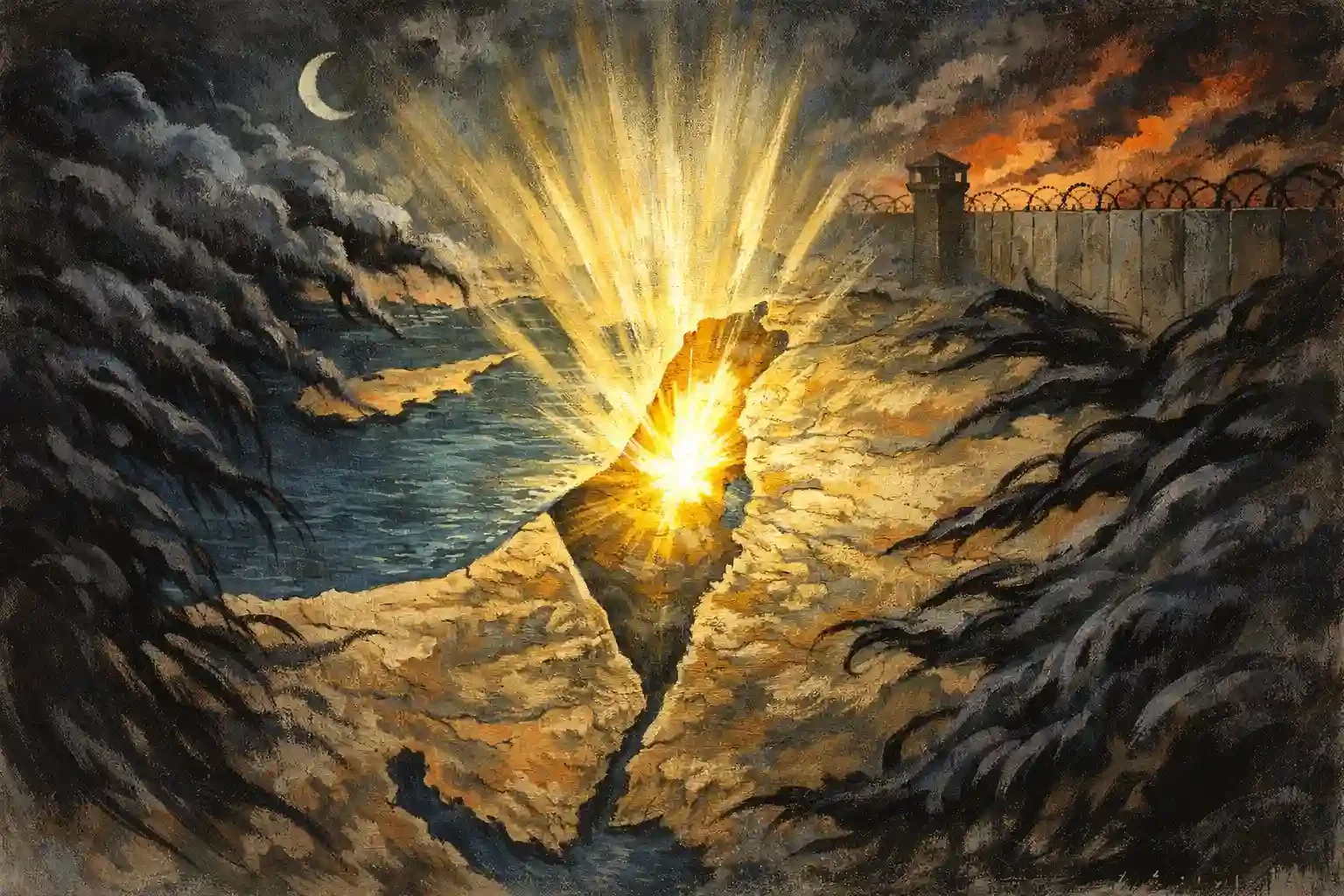
Faced with threats from both outside and inside, believers in Israeli democracy must continue to shoulder the fight the for it.
For many of us who are principally on the side of Israeli democracy, it has been a tough couple of weeks—not to mention years. If the ludicrous barring of Cardinal Pierbattista Pizzaballa from prayer at the Church of the Holy Sepulcher wasn’t bad enough, the lamentable decision taken by the Knesset last week to pass the Death Penalty for Terrorists Law for West Bank Palestinians convicted of fatal terror-related offenses has made defending the Jewish state all the more complicated—yet again.
These last few years since October 7th have really been a test of principles when it comes to belief in Israeli civil society and democracy. What does one do when a country, despite acknowledging the intelligent, vibrant, and free society that uniquely shines as a democracy in the Middle East, is governed by an unsavory cohort of cynics and racists? It is a question that many of us who generally support Israel against the assault of Arab nationalist and Islamist aggression have to try and find the answer to, as the battle to turn the country into a theocracy is waged upon it from inside and outside.
The whole moral point of defending Israel has always lain with the fact of its conduct as a state. Despite being surrounded by dictatorships and genocidal organizations whose sole purpose is the destruction of that society, Israel has been exemplary in not allowing that reality of near-imminent destruction to shape its political system. Political pluralism, liberty of expression, an independent judiciary, free elections, and a critical press have been remarkable achievements to maintain in light of these threats. This is not something that Turkey has been able to achieve, for example. While many insist on constantly asking whether Israel could do better (because, of course, it can and must), they also neglect another vital question that throws the moral judgments into perspective: which democratic society, under the same existential and moral conditions, would have done any better?
The reality is that Israelis face moral questions that many of us who live in snug, liberal democracies fortunately never have to face in our lifetime. For instance: what would you do if a teenager approached a checkpoint and you suspected they might be carrying explosives? What would you do if a child was moving toward you in a conflict zone and you had only seconds to decide whether they posed a threat? What would you do if you had to choose between acting on suspicion to protect lives or holding fire and risking an attack? These are things only our militaries have to face, but many ordinary Israelis also have to face them.
Yet this moral superiority only exists as long as the practice of democratic principles exists. After the passing of the death penalty bill, I have seen many pro-Israeli commentators try to point out the hypocrisy of neighboring countries for condemning it. While Saudi Arabia, the UAE, and Jordan—to name a few—act out of outrage at Israel’s bill, the irony is lost on them that they too have extreme death penalties that are, unlike in Israel, not subject to the same robust rule of law. But this calling out of hypocrisy misses the entire point when it comes to Israel’s moral position in the region: just because your neighbors do it too and worse, doesn’t justify sinking to their level. All too often, the legitimate charges of human rights violations of Israel’s Arab neighbors have been used to warrant greater abuses of power and rights, ultimately leading to a situation in which Israel’s moral supremacy will only be a fact on paper.
Much of this justification from the Kahanist far-right in Israel is built on the exploitation of the genuine concern for Jewish security—and it is a concern that is only growing worse today. The attempted annihilation of the Jewish people in Europe during the Shoah was a pivotal moment for this security question to be taken seriously, not just by the international community, but also by the Jewish people themselves. Despite millennia of persecution, the Shoah was the brutal consequence of the dark reality Herzl was trying to highlight two decades prior. That, while Jews might define themselves however they wanted, the terrible truth was that it was not up to them: if the Nazi SS officer has a chart that tells him exactly who’s a Jew, then no amount of self-definition will change his mind over whether you’re murdered or not. Left as refugees in countries where their own neighbors had turned them in to the Nazis, the push for an independent state became the only way in which the Jews around the world could finally be emancipated.
However, despite the founding of Israel, these Herzlian realizations have continued to occur several times over the last few decades, most recently during the Second Intifada and the genocidal massacre on October 7th. These relentless efforts from outside to destroy the country have contributed not just to the rise of the right in Israel, but also the decline of the left, as the latter’s response to the question of Jewish security has been insufficient to deal with the very real consequences of antisemitic terrorism. But while the Israeli right has been able to respond politically to these questions, it has also used these Herzlian realizations to exploit its own ends, both cynically self-serving and extremist.
Over the last decade, the false tension put between Israel’s Jewish and democratic character has come under even more stress. As Benjamin Netanyahu has needed to remain in power to avoid being sent to jail, there has been no political partner too unpleasant to help him cling to the premiership. Although the vile ideology of Rabbi Meir Kahane has been criminalized and designated as a terrorist organization (in its form of the Kach Party) since the Cave of the Patriarchs massacre in 1994, it has managed to worm its way back into Israeli society in the forms of Otzma Yehudit and the Religious Zionist Party, only because Netanyahu needs them for his own interest, rather than Israel’s. This has meant, in practice, that Israel’s claims of moral superiority have been steadily eroded from the inside, straining the principles of equality, rule of law, and of achieving Jewish-Arab unity within a single Israeli nationality. For instance, the passing of the Nation-State Bill in 2018 saw not just the assertion of a definitive Jewish exclusiveness of the state (which was largely symbolic), but downgraded Arabic from its equal status with Hebrew to a condescending "special status.” Indeed, for a Mazzinian, the Nation-State Bill was a definitive step in the wrong direction for nationality transcending ethnic and sectarian divisions that Israel, as a nation, has always had the potential of being. All of these increased ethnic tensions ended up manifesting itself (among other causes) in the riots that took place across Israel between Jewish and Arab Israeli citizens back in 2021.
With this recent passing of the death penalty bill and the renewed efforts to unilaterally annex Judea and Samaria, the pushback against Israeli democratic principles has only gained more territory. Even with its arguments to implement it as a deterrent against Palestinian terrorism, it is unlikely to deter jihadists whose sole desire is to die a martyr anyway. It has also rightly been pointed out that, given the creeping rise of settler-led violence on West Bank communities, any policy that does not attempt to deter both will be regarded as both politically and functionally discriminatory. What it does function as is another victory for the dream of Jewish dominance over the Arab population that Kahanism promises its voters. In effect, it brings us a step closer to the real manifestation of the apartheid accusation that many of us who believe in Israeli society defend it from. It brings us closer to the situation of Hebron as the norm rather than the worrying and appalling exception.
Israel can and must do better in spite of the standard being unfair. The lasting irresponsibility of the international community crying wolf at every turn, while neglecting to sympathize with the moral complexities Israelis face every day, has ultimately backfired. Israelis are starting to become more apathetic to how both allies and enemies alike see it. As Times of Israel political correspondent Haviv Rettig Gur has highlighted, this is exactly what the far-right wants. They want Israel to be isolated and they want it to be a pariah, because only when it feels like the rest of the world has abandoned them, their policies of ethnic cleansing, apartheid, and total settlement will (at least from their point of view) become the only options that Israelis could see as providing security. Of course, the majority of Israelis do not support or want any of these policies, but the international community’s vilification of the country will only end up making things worse, not “calling things out.”
For this reason, we cannot abandon our solidarity with Israeli democracy just when it needs us the most. While the rest of the world might want to either turn a blind eye or make Israel out to be a demon of demons, we who believe in universal democratic values should want the best of Israeli society to triumph in this battle of two fronts. It is not easy and—as I have already said—for Israelis, it means undertaking this unfair standard and living up to it, because the only other option is unthinkable. The best that Israel can be, in contrast to that in Gaza, has already shown itself in its support for small, unrecognized minorities in Somaliland. It has been evident in the intervention against Iran which, in spite of the pathetic dithering of its US ally, is not only strategic for Israel, but also born of a genuine solidarity that Israelis feel for ordinary Iranians who want peace and the end of their regime.
So if Israeli democratic society really is the sole bastion of humanity and democratic values in the Middle East, we must, coolly and solemnly, continue the fight for it, both against its enemies from without and from within, because if not, it can and will be lost.
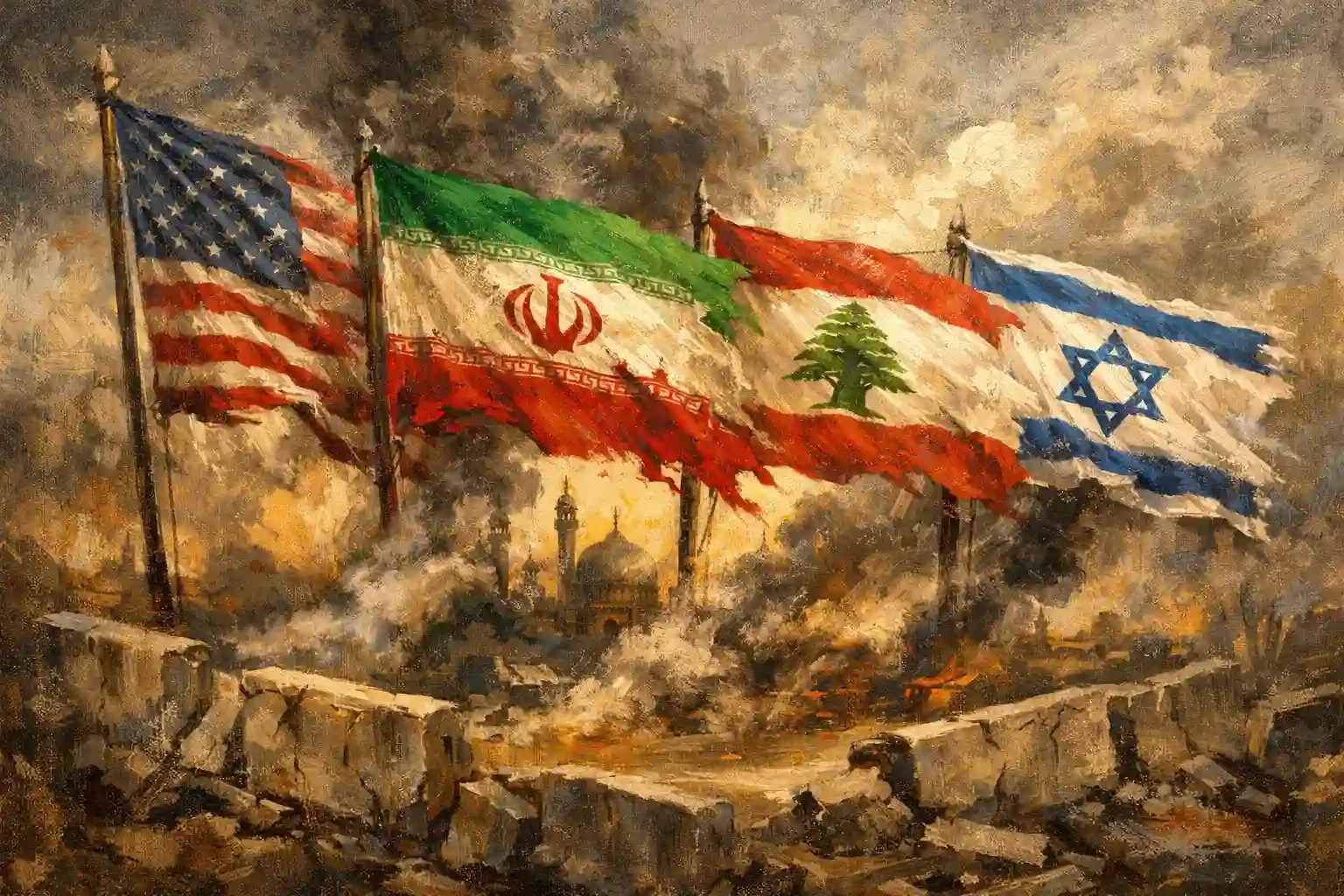
Trump running his mouth off at Netanyahu is probably justified, but the US president is really at fault for the disastrous intervention against the Iranian regime.