

Somaliland: The Idea of Earning Recognition
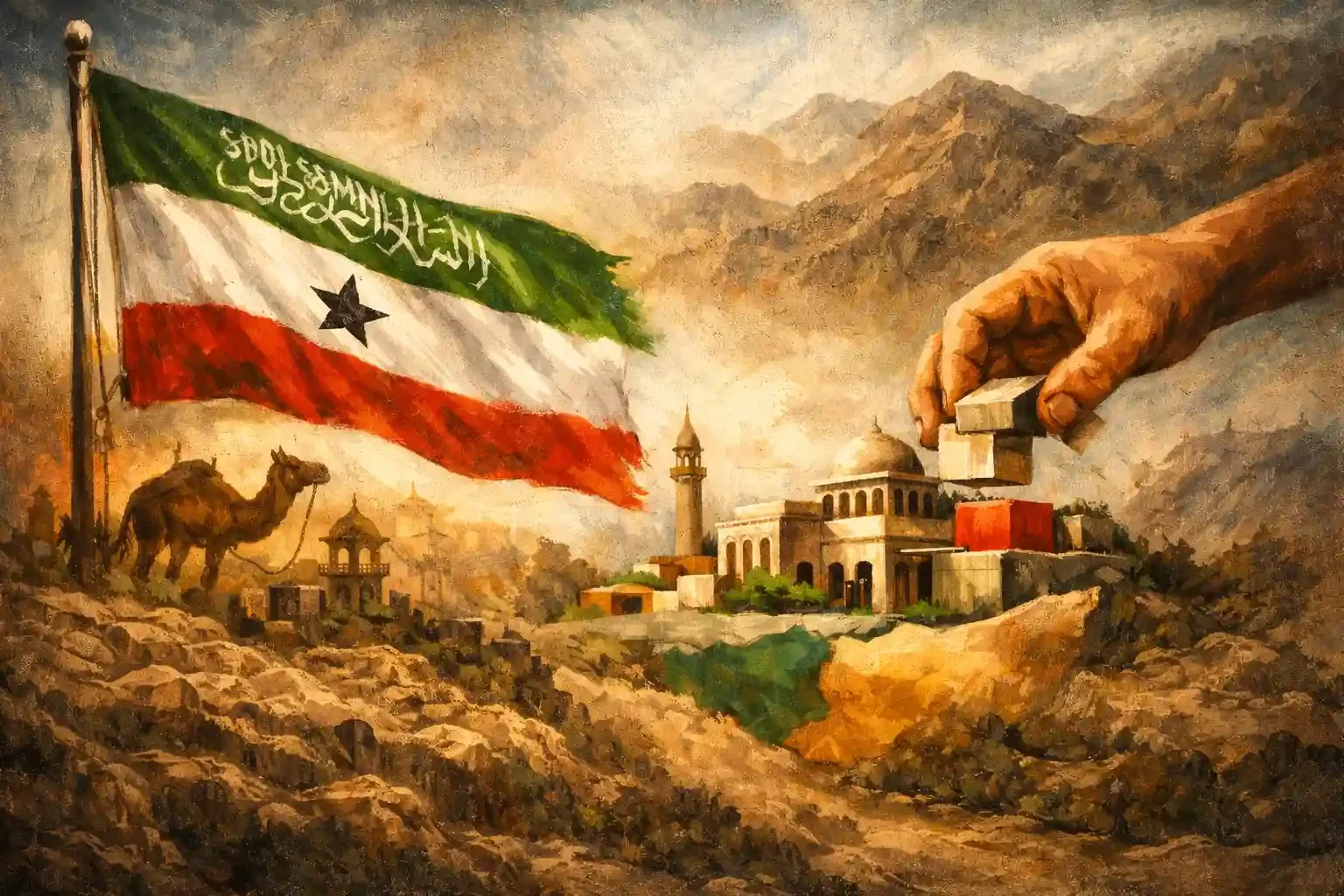
Israel's Boxing Day recognition of the breakaway African state of Somaliland has been followed by widespread condemnation. Despite being, in my opinion, a foreign policy masterstroke on the part of Netanyahu, it does open up an uncomfortable idea when it comes to self-determination struggles: is statehood a right or is it earned? Indeed, for many of us who are strong supporters of oppressed groups who are candidates for self-determination, the real aspect of both democracy consolidation and institution building can affect the likelihood of the state becoming independently recognized.
Self-Determination Is a Right
That being said, the moral imperative and principle for self-determination for a people cannot be denied, regardless of how they behave. In true Mazzinian spirit, the principle of democratic nationality for a people to choose to which political community they belong or to govern their own affairs is as sacred as individual rights. For instance, the right of the Kurds to be an independent group is not based on historical claims or ethnography, but on the inalienable spiritual existence of Kurdish nationality. And this is the case for all nationalities and that should be applied on principle.
But besides this idealism, there is another real justification for statehood that is more problematic: the persecution of a given group. In order to provide humanitarian protection for a group suffering persecution from either a government or another group, statehood is an important step for guaranteeing their safety. If we look at the illegal Azerbaijani offensive of Nagorno-Karabakh in 2023, this justification is clear. If those ethnic Armenians living in Artsakh had not had Armenia to go to, it is likely, looking at the evidence and government rhetoric, the blockade against the region, and a concentration camp built to hold men, that they would have faced genocide.
Indeed, this case for statehood prompted by persecution does begin with the Armenian genocide, but its best example is in Herzl's Zionism. Especially in the light of growing antisemitism across the world today, the idea that the Jews ought to have a place to go to escape persecution has been an essential humanitarian fact proven by the horrors of the Shoah.
But Is Independence Practical?
These are all the reasons why a people have a right to self-determination and the urgency for them to form one in the face of persecution, but is self-determination always feasible?
In many cases—sadly—statehood for a people is not possible given many different realities. The Kurdish region—spanning over four different countries—should have been created along with the Sykes–Picot Agreement, it would require each of these countries to generously give up their land for the Kurds. Even in the autonomous Kurdish region in Iraq, the question of independence would be extremely complex to work out.
Besides neighbors, however, there is the question of stability and institutions. If a people have been unable to create some sort of stable constitutional system and maintain strong institutions, it undermines their entire cause for independence. While the Kurds have managed to achieve some sort of democratic society—with a free press and limited civil liberties—the same cannot be said of either Palestine or Western Sahara. However, the possibility of a terrorist-controlled state completely negates the immediate practical implementation, even if it doesn't undermine the principle. The most tragic example of this is Palestine, which finds itself without a state purely because no one—Europe, the US, Israelis, or Arabs— trusts them with one. In fact, it should be noted in the Palestinian case that efforts to consolidate Palestinian institutions were made under the premiership of moderate Salam Fayyad between 2007 and 2013, with the intention of readying the nation for statehood. However, due to difficulties both with Hamas in Gaza, frustrations with Israeli policy, and differences with President Abbas, this sadly is now just a footnote in history.
The Somaliland Case
But now turning to Somaliland, it is clear that, on the whole, the breakaway region fulfills both the principle and practical requirements to form a state. Despite being politically attached de jure to the world's most renowned failed state, Somaliland has—since the collapse of the communist state under dictator Siad Barre—managed to consolidate itself as reasonably stable. They have, since the Somali National Movement declared independence, managed to develop all the vital institutions for their own state: issuing their own currency, possessing their own army, and maintaining their own borders. This does not mean there aren't problems, but for their regional position in the Horn of Africa, where death, dictatorship and terrorism reign, it is better than most independent states.
Beyond institutions however, Somaliland as a de facto independent state has also been a vital refuge for the Isaaq clan that faced a violent genocide from the Somali Democratic Republic under Barre. The indiscriminate attacks on civilian villages and mass killings by the Somali Armed Forces led to the deaths of over 50,000 to 100,000 people, with its capital Hargeisa becoming known as the 'Dresden of Africa'. This legacy of persecution of the Isaaq follows the same necessity for statehood as both the Jewish and Armenian cases.
Interests and Interests
Israel's interest in Somaliland is not just to cock a snook at Western nations for their unilateral recognitions of a Palestinian State in 2025. Indeed, relations between the Jewish state and Somaliland have been warmer than most the former has had in the region, as in 1990, Israel was the first to bring the Isaaq genocide to the world's attention. But also strategically, a formal relationship with Somaliland as an independent nation provides Israel with the possibility of a base to help it counter the Houthis in Yemen, who have continued to fire indiscriminate missiles toward Israel since Hamas' genocidal assault.
But it isn't only Israel that should be interested. As Islamist militancy ripples through Africa and terror-related deaths in the region reach a crescendo, the military value to the US and other Western nations cannot be denied. While the US has recently coordinated many attacks with Somalia to counter Al-Shabaab in the north of the country, moving operations formally to Somaliland might be a lot more practical as well as showing solidarity with the Somalilanders' claim for self-determination. For the moment, and understandably for the sake of pragmatism, the US hasn't made a move to follow Israel's policy, but perhaps it might be wise.
A Meeting of Principles and Strategy
Israel's recognition of Somaliland will perhaps be one of its better examples of statecraft after the disastrous foreign relations crisis it has had since the beginning of the war. Indeed, it shows Israel at its best as willing to recognize and cooperate with other minority groups in MENA and align themselves with democratic principles. Rather than the appalling conduct over the Gaza War, Israelis can remind us what they're really about.
Somaliland should obviously be recognized by other countries in the world. While there is no question of either many African or Arab states following suit, the West should definitely consider it, especially in the light of the anti-French, anti-European and distinctively pro-Russian turn many states along the Coup Belt have taken in recent years. Indeed, for as long as European countries recognize Palestine—whose borders are undefined, institutions non-existent, and democratic processes on a permanent stall—they will endure a persistent hypocrisy over why them and not the Somalilanders, especially given the differences.
As I said earlier in this essay, the right to self-determination is a right and it cannot be earned or lost through behavior. But if it were, the Somalilanders would most certainly have earned it.