
How To Get Away with Occupation
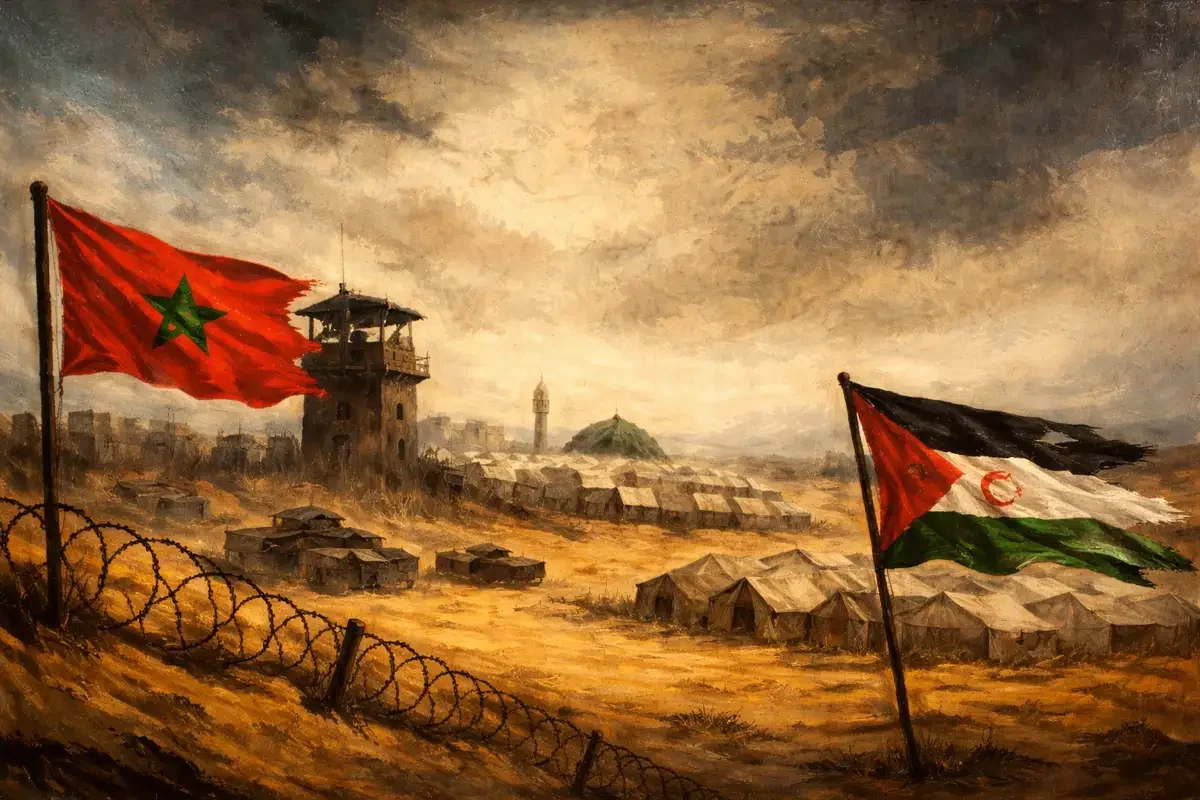
If anything can be taken away from the UN Security Council's Halloween backing of Morocco's autonomy plan over Western Sahara, it's that illegal occupation can be legitimized if you go about it the right way. While the UN have (rightly) been wringing their hands over Israel's occupation of the West Bank since 1967 and have repeatedly condemned Turkey's occupation of northern Cyprus, it's apparently not as much of a big deal as long as you have a decent PR campaign. In fact, Morocco has proven that the more strident you are about it, the quicker those moral principles melt away.
The principle of Sahrawi self-determination has been undermined by the relatively little attention it receives compared to other comparable conflicts. While human rights are at the center of the Israeli-Palestinian conflict, the UN Mission for the Referendum in Western Sahara (MINURSO), mandated to oversee the ceasefire between the pro-independence Polisario Front and Morocco brokered in 1991, has controversially never had a mandate for monitoring human rights abuses.
Indeed, while settlements and expulsions in the West Bank have been of great humanitarian concern, Morocco's harsh repressive measures against pro-independence journalists and activists are unfamiliar in Western public consciousness. With Moroccan settlers now constituting "nearly two-thirds" of the population in the territories it occupies, over 170,000 Sahrawis live in exile as refugees in Algeria.
This refugee crisis has been second only to the Palestinian situation, but unlike the Palestinians who have the dedicated UNRWA to defend their rights, services, and status, the Sahrawis are administered by the main UN body serving all refugees, UNHCR. Indeed, where the Palestinians have multi-generational refugee status handed down (essentially keeping them in limbo, but defined), the Sahrawis' status is much more precarious, with statelessness being commonplace.
But the Moroccans have received little international condemnation for the humanitarian situation their irredentism is causing, and it's really due to the way they've played it. Devoid of international backing or support, the Polisario Front has reportedly moved away from its Marxist and democratic convictions and—though it denies it—has allegedly found support in Islamist terror groups such as Hezbollah and terror-sponsors like Iran. Although these remain accusations by many states (and naturally support Morocco's narrative), the sad reality is this shift is likely true. Especially in recent years, the Polisario Front has carried out a number of terror attacks on Moroccan civilians, making it unfit to represent the case for independence, undergoing what could be termed "Hamasification".
However, none of this overrides the principle of Western Saharan self-determination. As a group that has been persecuted and displaced by an occupying power, the international recognition of the Sahrawi Arab Democratic Republic (SADR) would be the correct way forward to resolving the crisis in a just way and putting the pressure on the true culprit. Unfortunately, with the desperate drift of the Polisario Front and the relentless PR campaign (and possibly blackmail) by Morocco, the kingdom's own 2007 autonomy plan is likely to be the only solution world leaders will consider.
Indeed, both the US and Israel have recognized Moroccan sovereignty (in 2020 and 2023 respectively), and many European nations such as the UK, France, and Germany have formally backed the plan. The most significant has of course been the African countries' former imperial master Spain's 2022 policy shift to a pro-Moroccan stance, leading to a diplomatic crisis with Algeria. The UN Security Council's approval of the plan perhaps now hammers in the final nail in the aspirations for Western Sahara's independence.
If the proposal for autonomy, which would see part of Western Sahara governed much like Somaliland governs its affairs in Somalia or Spain's autonomous communities, had come from a democratic Morocco, perhaps it would be worth considering. However, as King Mohammed VI still maintains unacceptable influence over public affairs, and given the chauvinistic language used by Moroccans toward the Sahrawis (ironic in the face of their vehement support for Palestinians), it would be wise to remain skeptical that Morocco's reasonability is just another effective step in its realpolitik.
If Morocco had conceded on a referendum on the plan for the Sahrawis—a long-term red line for Rabat—it might have been worth considering, but the continued denial of the Sahrawis' right to decide for themselves is another tragic blow for self-determination. In other words, if you want your illegal occupation to be accepted, do it à la marocaine.
As the Sahel emerges as the global epicenter of jihadist violence, the recent joint US-Nigerian strikes signal a long-awaited strategic shift toward collaborative intervention in West Africa.