

The Erdoğan Solution: Choose Your Opposition Leaders
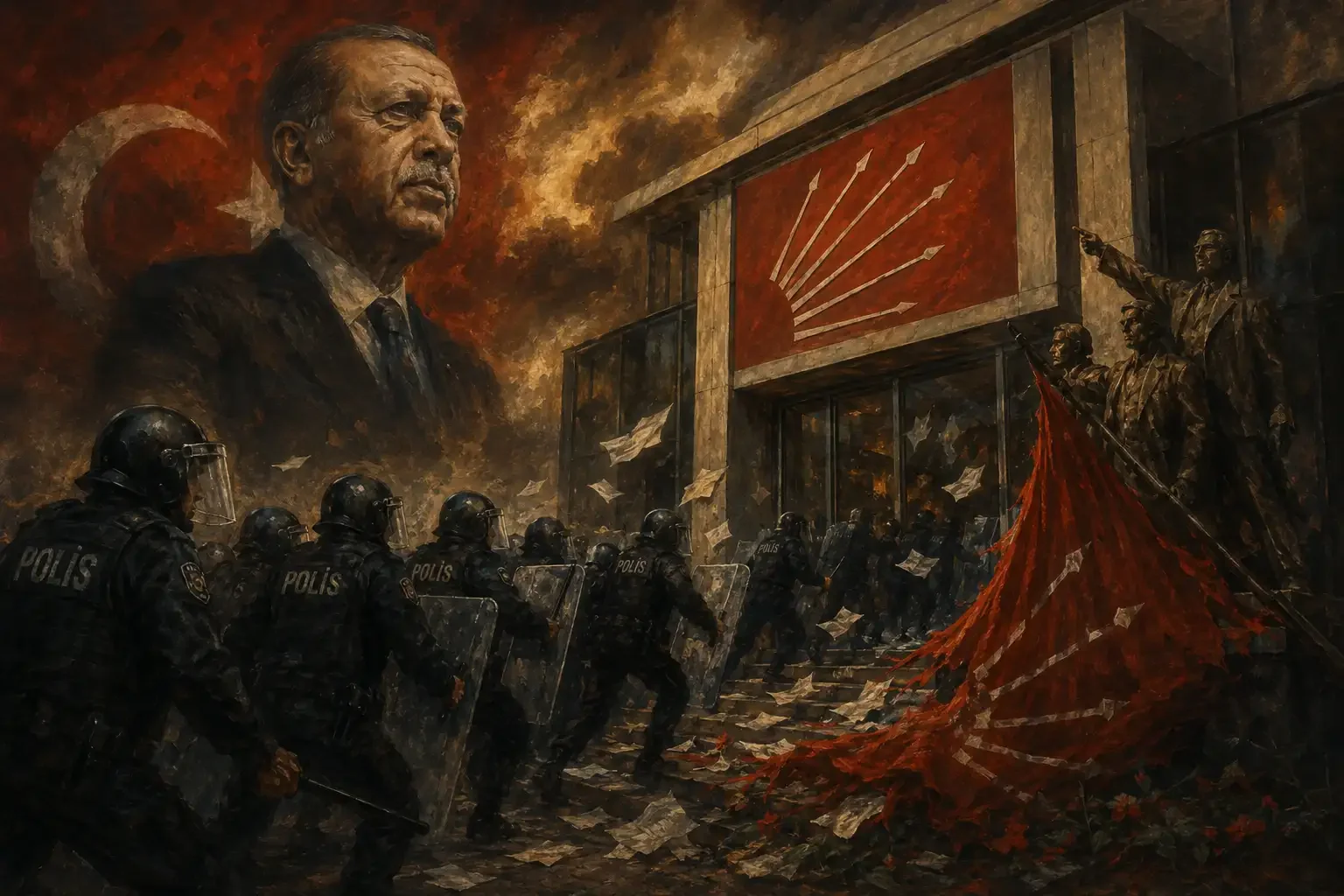
Erdoğan’s discovery that no state of emergency is necessary when you can choose your opposition’s leadership for them.
Despite the increasing autocratization of Turkish politics, President Erdoğan hasn’t quite achieved the one-party state that he’d probably like. Though the reality is, he probably doesn’t need one. His approach of immobilizing rather than silencing his political opposition is even more dangerous. While one could call it autocrat’s pragmatism dealing with a nominally democratic country, it is also likely even more effective than outright dictatorship. And as police stormed the Republican People’s Party headquarters in what was likely a judicial coup, it is only another reminder that dictatorships aren’t always established jarringly, but through creeping party overreach.
Lawfare is a neologism that gets bandied around in Western democracies, but it’s mostly been used by sitting governments to deflect from their own corruption. In Turkey however, the weaponization of the judiciary by the sitting government has become a real problem, with the ruling Justice and Development Party (AKP) repeatedly using the courts against opposition figures. While I’m sure that President Erdoğan enjoys a good election brawl like any politician (he does, to some degree, run Turkey for fun), when it cuts too close to the bone as it did in the 2023 election when he came close to losing to the CHP’s Kemal Kılıçdaroğlu, it was a clear signal to ramp up against dissent. And when the CHP made significant gains in the 2024 local elections, defeating the AKP in major cities such as Ankara and Istanbul, (and more significantly Bursa and Manisa), Recep’s claws were ready to come out.
While the CHP—and their voters—were kicking themselves over not choosing successful Istanbul mayor Ekrem İmamoğlu as their presidential candidate who likely would have beaten the incumbent, Erdoğan was looking for how best to put the same man behind bars. In 2025, İmamoğlu was imprisoned on corruption charges as inventive as they were extensive, including bribery, extortion, misuse of municipal resources, and alleged links to terrorism. The scope of İmamoğlu’s supposed crimes is often a mistake made by authoritarians who trump up charges: rather than more realistic single accusations, they tend to go a bit overboard. Indeed, the indictment against İmamoğlu was so dramatic that prosecutors asked for a total of 2,000 years in jail. Regardless of the content of the charges however, they effectively “took out” Erdoğan’s most important challenger and upped the ante for dealing with the opposition, and 1,900 protesters found themselves arrested.
In the aftermath of losing the 2023 election, Özgür Özel was elected as CHP leader at the party’s congress. A more confrontational opposition leader than the former leader Kılıçdaroğlu, Özel has taken a much more aggressive stance against Erdoğan, coupled with a reputation for being a mean political organizer. However, on 21 May this year, the Ankara regional court of appeal annulled the 2023 congress (and all subsequent party decisions) for vote buying, as well as, of course, for corruption. The police, armed with rubber bullets and tear gas, marched into the CHP headquarters to evict the leadership and Kılıçdaroğlu was effectively forced back as leader in Özel’s place. The aim of this “absolute nullity” is likely to help Erdoğan divide and conquer the CHP in the run-up to possible snap elections before 2028.
The implications for this are sinister because the methods are not overt. If you can manage your own opposition’s leadership for them, you eliminate both their potential to contest you come election time while still maintaining the electoral process. It is a lot harder to deal with when the rule of law is a sacred principle and has the impression of impartiality. This is the reason why principled opposition, even in the face of unfairness, is central to any democracy movement.
Turkey’s democratic erosion has been both terrible for the Turkish people and for the region. In his nostalgic quest to return to some former Ottoman glory, Erdoğan’s Turkey has become a significant international threat that is unfortunately under-discussed. But the battle against Erdoğan needs to be won on the home ground rather than just countered abroad—which is probably impossible, given Turkey’s membership in NATO. This means that, in the face of his open lawfare against dissenters, we need to show solidarity with the democratic opposition in Turkey.
While I personally have many problems with Turkey’s republican founding and history for well-documented reasons; while I dislike the widespread denialism of the Armenian genocide, as well as the treatment of the Kurds; in spite of all that, the fight for Turkey’s democracy is an internationalist one and one to which we owe our support regardless. Only once Turkey has been released from Erdoğan’s tightening grip can it return to its role as the democratic bridge between Europe and the Middle East.
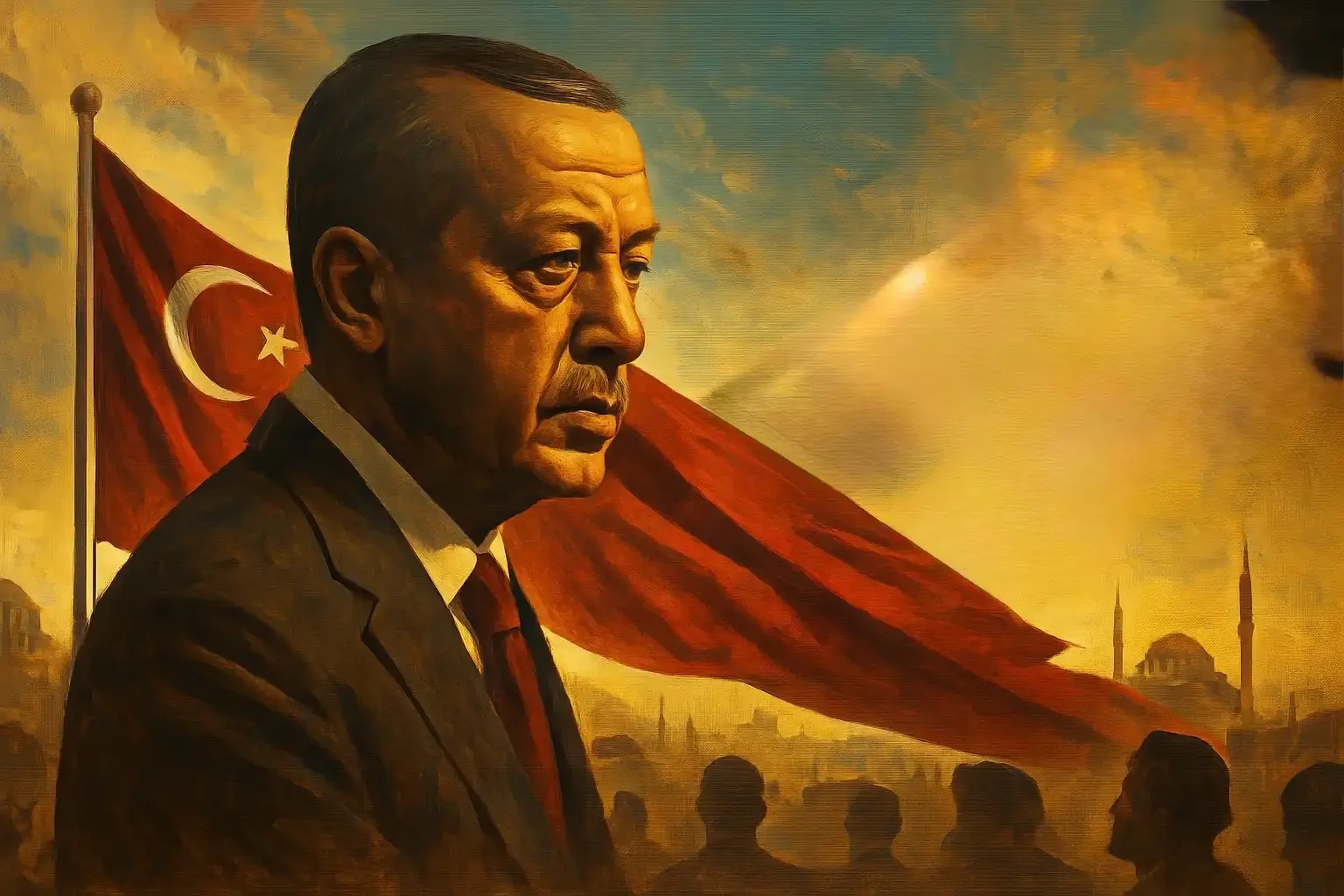
Erdoğan’s discovery that no state of emergency is necessary when you can choose your opposition’s leadership for them.