
Protests in Bolivia: Microcosm of Latin Left-Right Divisions
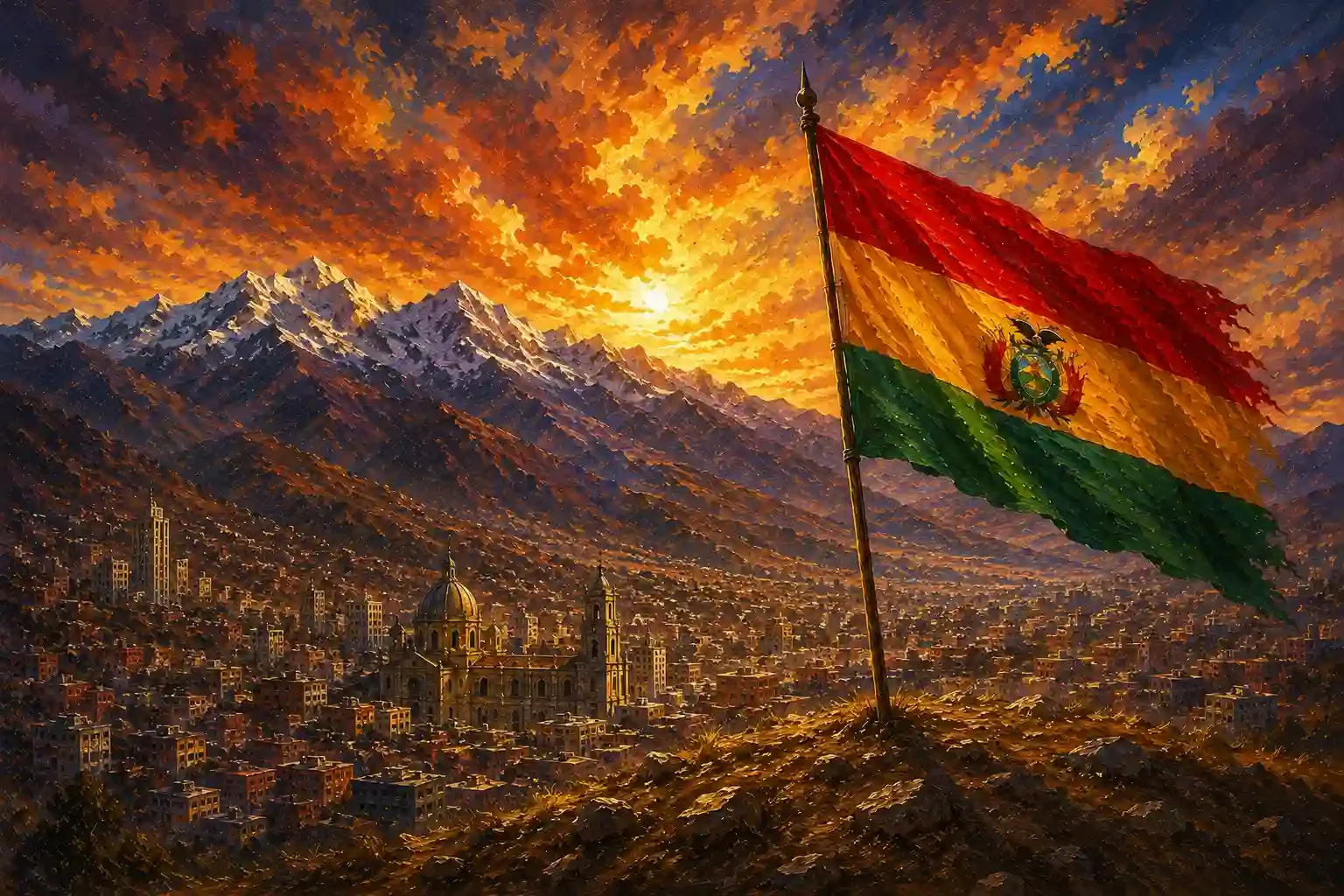
Bolivia’s ongoing protests represent much of the ideological polarization across Latin America—and it’s been remarkably resilient in being democratic about it.
While I have vaguely been aware of Evo Morales’s antics—especially after his dramatic resignation and flight in 2019—my knowledge of the country was relatively limited. The only two Bolivians I know run the store round the corner, and, despite a population of around 180,000 in Spain, I haven’t had the pleasure of meeting many others. However, as personal connections ought to do, I have corrected some of my ignorance and have been following Bolivian politics ever since 2023—with a lot of concern.
Bolivia’s dangerous dance between democracy and despotism has been so precarious that it is almost admirable. Despite experiencing coups, autocratization, state violence, and total economic collapse, Bolivian society has managed to avoid both a return to a military junta and a Venezuela-style dictatorship. It has been little like watching the funambulist wobble violently along the tightrope while still miraculously avoiding a plunge to their death. In fact, in a world where most societies would have already buckled, Bolivia’s continued constitutional survival—no matter how diminished—says a lot for it.
But Bolivia’s democratic resilience is not the only factor that has made the country an enigma; it’s the fact that it’s done it whilst simultaneously suffering most of the ailments characteristic of Latin American politics. A dominant theme of light-skinned elites versus indigenous rights, or socialism versus neoliberalism, or fierce pro- and anti-Americanism, will generally emerge more salient in one Latin country or the other, but Bolivia has them all in equal measure. And as protests continue to escalate in La Paz, the country is increasingly turning into a proxy struggle between all the dramatis personae involved.
The collapse of the Bolivian economy in 2025 was scandalous, not just because it was avoidable but because the warnings were ignored. When Evo Morales and his Movimiento al Socialismo (MAS) party came to power in 2005, Bolivia imitated the same mistakes made by Hugo Chávez’s regime in Venezuela: financing expansive social programs largely through its exports of natural gas while neglecting long-term diversification. While Bolivia’s abundant natural gas exports funded the country’s development, the Morales administration also hiked up hydrocarbon taxes and effectively drove out foreign exploration so that no new natural gas fields were found. As a consequence, production peaked in 2014 and proceeded in decline. For instance, the San Alberto field’s production reportedly fell from about 11 million cubic meters per day in 2007 to around 4 million by 2018, leaving the country vulnerable to a shock due to its lack of diversification. Despite several warnings from analysts and economists about imminent depletion, the MAS governments did little to expand production. So when Argentina under Javier Milei expanded its natural gas production and stopped buying from Bolivia in 2024, the country was in real trouble as its reserves were depleted and its macroeconomic backbone snapped. The great irony was that despite having always been a net exporter of natural gas, Bolivia quickly became a net importer as reserves were depleted, encapsulating the Bolivian paradox with tragic succinctness.
It is therefore unsurprising that in October 2025, Bolivians elected Rodrigo Paz, ending MAS's twenty-year dominance and producing the first non-leftist government in two decades. With Bolivia’s traditionally low inflation rate hitting a high of over 24% in July 2025, it left the country’s socialist experiment spearheaded by Evo Morales during the early 2000s almost entirely decimated. Thus Paz’s promises of liberal reforms looked to voters as the only viable way forward for the country.
However, even though Rodrigo Paz did not run advocating a post-Soviet style shock therapy approach that his opponent and former president Jorge Quiroga advocated, the measures were still harsher than expected. The reforms to address the country’s collapsed economy has driven up the cost of gas, food, public transport, and many other goods. With the enactment of several harsh austerity measures, from tax and spending cuts, to the “junk fuel” scandal, and the Land Mortgage Law, the negative repercussions have plunged the country once again into a national crisis. Despite the vehement opposition from indigenous organizations and peasant unions—leading to the Land Mortgage Law being annulled by Paz after only being in effect for a month—it hasn’t been enough to stop the protests marching on the capital and paralyzing the country.
The ongoing siege of La Paz has led to an effective shutdown of the country. The Bolivian Workers’ Central (COB)—the country’s largest union—has become the main driver of the strikes and anti-government mobilization as well as the strategic blockading of major highways, cutting off the city’s supply lines and medical supplies (with some patients having reportedly died due to not having supplies in hospitals). The siege has also turned violent, entering into a state of urban warfare, with miners detonating sticks of dynamite in the city, Molotov cocktails reportedly thrown at security forces near the presidential palace and police answering with tear gas. And it has all the appearance of getting worse in the near future.
While the economic collapse has been the most significant part of the current crisis, there is no getting away from the ethnic clashes either. While we already have a mix of Venezuelan over-dependence and Milei-style harsh liberalization, the ethnic tensions between mestizos and the indigenous population in Bolivia are more reminiscent of Peru and Ecuador’s politics. Evo Morales’s original appeal, despite also his social reforms and economic nationalism, was also built on the back of indigenous emancipation that was eventually reflected in Bolivia’s constitutional transformation into a “plurinational state” in 2009.
When Morales tried to usurp power by running for a fourth term in 2019—despite the quite blatant electoral fraud and the “mysterious” 24-hour pause in the vote counting—the ethnic divisions were again reasserted themselves in the consequential interim presidency of right-wing senator Jeanine Áñez. Following Morales’s flight to Mexico, pro-Morales and mostly indigenous protesters in Sacaba and Senkata resulted in security forces resorting to live ammunition, killing over 20 civilians and injuring dozens more. The massacres—though part of the overall political upheaval due to Morales’s desire to cling onto power—were emblematic of other mestizo-indigenous frictions elsewhere. Indeed, a chillingly similar massacre would be later played out in Peru’s Dina Boluarte’s interim government following Pedro Castillo’s disastrous self-coup in 2022.
Though to a much lesser degree, the ethnic tensions were also present in the bitter MAS civil war that began after Morales fled the country and Luis Arce assumed the presidency. The fight between the grassroots evistas and the more pragmatic arcistas, despite having mostly a rural-versus-urban divide, still had a faint ethnic tinge, with the more indigenous siding with Morales and the more middle-class urban siding with Arce.
However, and perhaps more significantly, Bolivia has been becoming a diplomatic proxy battleground for the surrounding countries, particularly when it comes to the continent’s relationship with the US. Amidst the fog of the ongoing protests, US, Argentine, Chilean, and other right-wing administrations in Latin America have strongly backed Paz’s government, while the protesters have been openly endorsed by others on the political left, with characters such as outgoing Colombian president Gustavo Petro as well as ex-Honduran president Manuel Zelaya declaring support. Polarized views over the US intervention to remove Maduro in Venezuela, as well as the clashing Pink and Blue Tides in recent years, is being staged most vividly in Bolivia’s current crisis.
We must admire how Bolivians have managed to cling on to their democratic practice despite all its adversity. The polarization, the coup attempts, the economic distress are all aged-old adversities to democracy, and that the Bolivian people have been able to resist resorting to dictatorship is quite remarkable. The October election last year that allowed for Bolivia to smoothly change governments means that the process is there and is worth defending.
The real question as the protests continue is not whether we choose the side of the government or the protesters (neither side deserves full support), but whether we support the continued spirit of democracy and constitutional procedures that hangs resolutely from its thread. This is the true cause for the democracy movement in Bolivia: the delicate balancing between the two side, rather than the parties in themselves. Abstract and underappreciated as it is, it remains precious, and it must be defended for its own sake, rather than collapsed into the easy business of choosing sides.
Argentina’s irredentist expansionism over the Falklands is nothing new. But Milei’s confidence that Trump backs him is less about sovereignty and more about punishment for Europe.