
Elections in Hungary and Peru: One Out, One In?
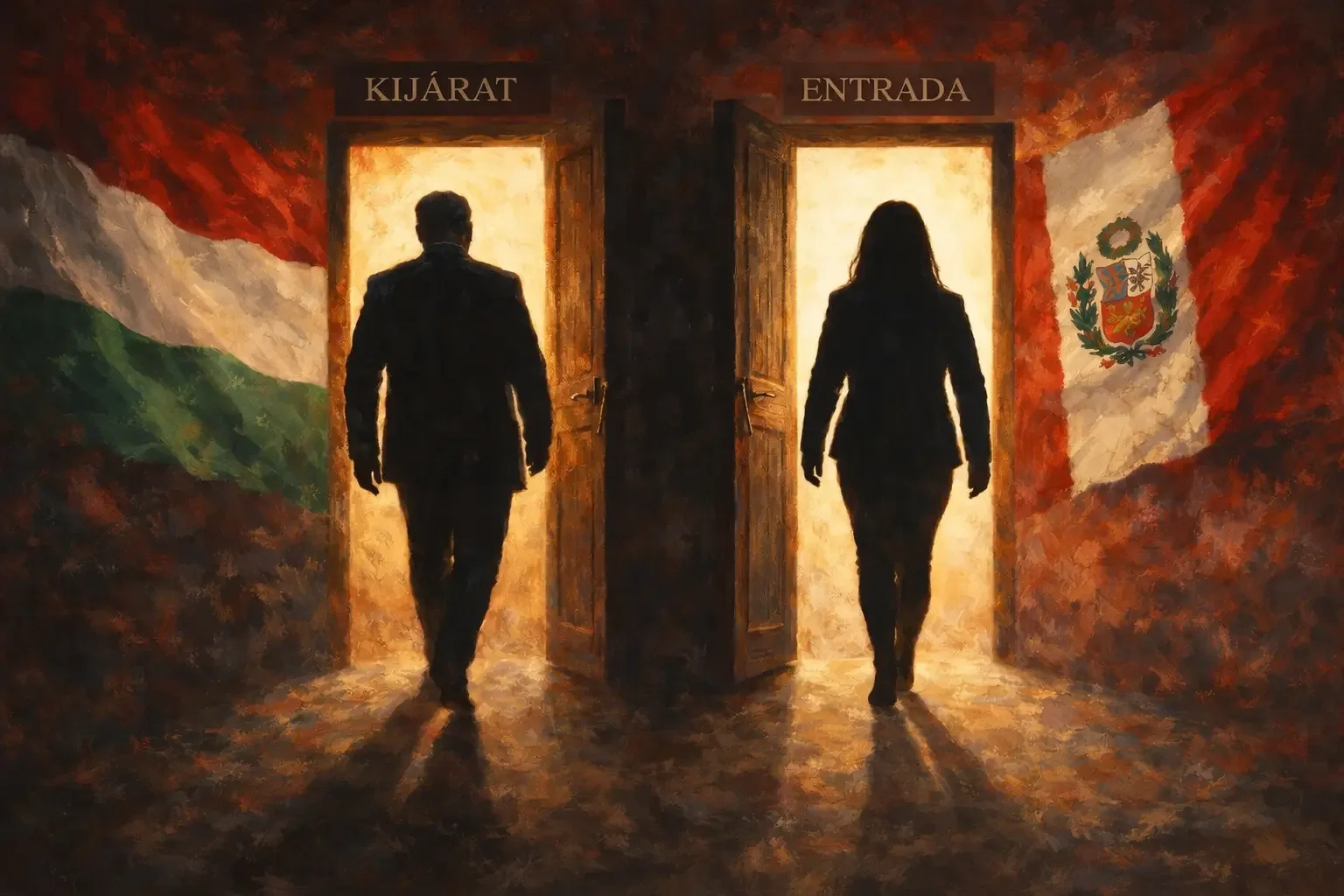
As one autocrat is deposed, another often pops up somewhere else. While we can celebrate Orbán’s defeat, Peru’s democratic crisis might be getting worse.
Autocrat whack-a-mole is a game that the international democratic opposition will need to get used to playing in the near future. As Europe woke to the welcome news of Hungary’s long-standing strongman Viktor Orbán’s defeat at the hands of the center-right’s Peter Magyar, the daughter of Peru’s former dictator Keiko Fujimori found herself—not for the first time—going through to the second round of presidential elections. It seems that just as you free one country from an authoritarian force, unfortunately another tends to spring up elsewhere, and the concentration of our democratic energies needs to be carefully applied to preserve the victory in one place, whilst also being able to oppose the new situation in the other. For democrats, as both these elections attest, the fight continues.
The Hungarians’ victory over Orbán has been no small feat. The relentlessness of a determined political opposition has finally managed to unseat a leader whose allegiances have been at best dubious. He has long been the weak link in the chain that Europe has needed when facing down the Putinist threat, and just when, despite our internal differences, Europe needed unity when Ukraine was invaded, Orbán consciously chose a side and became the combined pimp and prostitute of the Russian regime. Despite making himself out to be a reasonable, conservative cool-head in the right’s growing skepticism of the EU’s disastrous immigration and refugee policies, the price paid—mainly by the Hungarian people—could have been much lower. And at last, his economic incompetence and Hungary’s raging inflation rate have probably been what has tipped the balance against him.
But this is truly a Hungarian victory—not just a European one. As Orbán’s Fidesz party has spent the last 16 years in power, it has consistently eroded those pluralistic institutional necessities that ought to be sacred to any democrat. Freedom of the press, judicial capture, and the infiltration of party operatives into Hungary’s political institutions have all been employed with the intention of subverting democratic processes, while maintaining the pretense of democratic practice. This form of salami-slicing counter-democratic tactics is currently the greater danger that democracies face from the inside. As we have sadly witnessed in Spain, Poland, Israel, Turkey, Serbia, India, and Tunisia—just to name a few—parties and their leaders, once elected, will use constitutions against themselves in order to secure a firmer grip, not just in parliament, but over all political institutions, making it far harder for any successor to govern. This is the remaining work that the Hungarians face going forward from this election, and much will depend on Magyar's ability to perform in office and prevent Orbán from staging a comeback.
However, there is much cause for celebration in not only Orbán’s defeat, but also in its method. One of the core principles of Mazzinianism in Europe, in fact, is to focus on bringing about a democratic revolution through the ballot box. A form of mass political mobilization and expression of national unity in defiance of a harmful or dysfunctional leader or elite is exactly what a Mazzinian should be trying to inspire in Europe. What has happened in Hungary is not merely an electoral success, but an example for what Mazzinians ought to aspire to themselves. Magyar and his party Tisza’s focus on creating a centrist and transversal anti-Orbán movement to move beyond partisan sectarianism for the sake of the future of Hungary is something we should take note of. Combined with the resolve that some left-wing parties, such as the Solution Movement, the Second Reform Era Party, and LMP, to not contest the elections, is a marker of Mazzinian-style duty to put political interest aside for the sake of national unity. Indeed, this Hungarian election has given hope that a truly national and democratic movement with a high turnout can overturn cynical nationalist forces and has been a great test of Mazzinian theory.
Yet this happy news has not been the case on the other side of the world. In their first round of their general elections, the Peruvian people are looking at the return of an autocrat—albeit in the form of a progeny. While enormous focus has been rightly on the Venezuelan people, commentators have quietly ignored the other Latin tragedy that has been Peru’s democratic erosion. Keiko Fujimori—the daughter of the late dictator Alberto Fujimori (who had been imprisoned for crimes against humanity)—has emerged from the first round as a definitive candidate for the second, and the persistent specter of her father’s fujimorismo is likely to drag Peru even deeper into institutional decay.
Despite thrice failing to secure the presidency, Keiko and her party Fuerza Popular have found no difficulty in holding Peru hostage. Unlike Orbán, who abused his premiership to entrench his influence into Hungary’s political institutions, Fujimori has managed to do something similar from the position of opposition. Through weaponizing Article 113 of Peru's constitution—the infamous “moral incapacity” clause—she has been able to wield her congressional majorities to topple successive governments, simply for her own and her cohorts’ benefit, without being elected. The corruption charges that still hang over her head from the all-encompassing Odebrecht scandal have made her bid for the presidency a cynical necessity to stay out of jail. While the case has affected the majority of Peru’s (and Latin America’s) elite, Keiko’s desperate need for power is likely to push Peru even further toward autocracy, all for her own personal survival. This is the classic cynic’s tendency to destroy anything sacred and good just so they can remain free and puts Keiko in the same camp with Pedro Sánchez and Benjamin Netanyahu.
What makes matters worse in Peru, and why the situation is in some ways more tragic than even in Venezuela, is that Keiko is likely to be the least bad candidate when the second round in June swings around. With the Trump-style populist López Aliaga holding fast in Lima, the likelihood is that Peruvians, once again, will be looking at another Sophie’s choice. The reality of having to pick between two right-wing authoritarians this time around has only been exacerbated by the Peruvian left’s behavior, especially with the pathetic attempt to usurp power—in the form of a Fujimorista self-coup from the former president Pedro Castillo. The removal of Castillo with the same moral incapacity clause put in place his vice-president Boluarte, who, in the face of mass protests from the indigenous supporters of Castillo, implemented a brutal crackdown, leaving over 60 people killed and leading her directly into Keiko’s pocket.
The democratic opposition has achieved a victory in deposing Orbán, and the Hungarian people now have a strong position to claw back what has been held from them when it comes to their democracy. It is a reminder that this type of Mazzinian-style national unity is what is necessary to defeat corrupt elites and autocratic leaders. But it is also a reminder that we must apply this everywhere, especially as elsewhere is bound to darken.

Argentina’s irredentist expansionism over the Falklands is nothing new. But Milei’s confidence that Trump backs him is less about sovereignty and more about punishment for Europe.