Peruvian Elections 2026: Fujimori 2.0
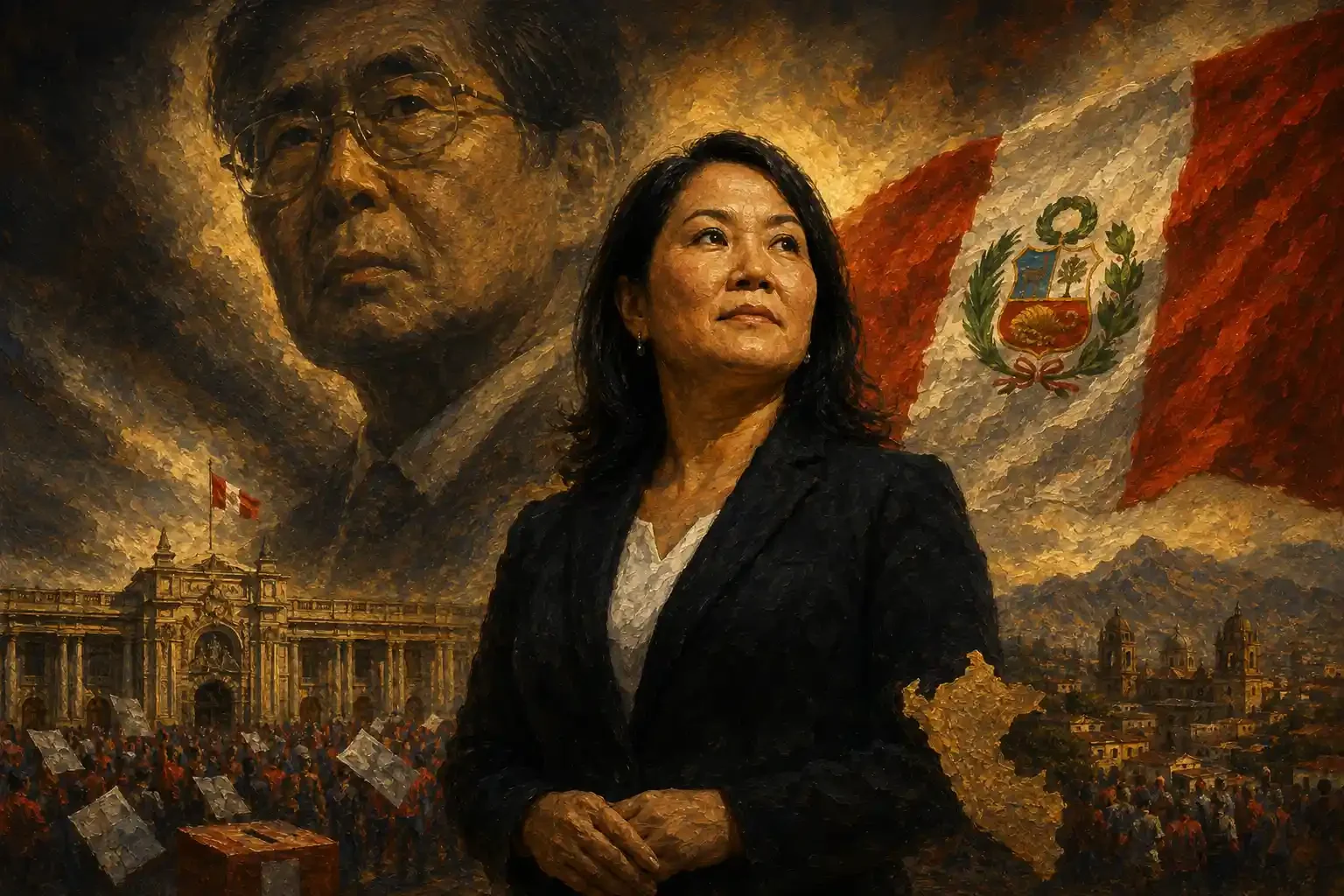
Keiko Fujimori’s victory in Peru may signal an end to the country’s agonizing turmoil—but at the price of an increasingly autocratic regime like her father’s.
You would think that after being rejected for the presidency three times already, you might take the hint. But in the case of Keiko Fujimori, it turns out that persistence pays off. After well over a decade of trying to ascend to the throne that her father occupied (and abused) during the 1990s, she’s finally managed win a presidential election, making Peru the latest to join Latin America’s “blue wave”.
But to argue that Ms. Fujimori has been merely a long-suffering opposition leader against a succession of left-wing governments would be to utter a falsehood. In fact, if anyone has been sovereign in Peru, it has been Fujimori herself. Without even touching the presidency, Fujimori and her party—Fuerza Popular—has managed to turn Peru’s ok-ish democracy into one of the most notorious examples of a parliamentary autocracy there is.
Peru’s descent from democracy to hybrid regime has been Latin America’s other tragedy. While Venezuela’s autocratization under Hugo Chávez and its intensification under former president Nicolás Maduro has been the more dramatic decline, Peru’s trajectory toward authoritarianism has been dolefully sinister and slow. Indeed, the blueprint of the tragedy was laid down by Fujimori the father in the first place when the dictator introduced a new constitution following his infamous autogolpe “self-coup” in 1992.
The constitution, ratified by a plebiscite the following year, included an article—Article 113—that was intended strictly as a measure to remove a president for objective, verifiable physical or mental illness—or incapacidad moral permanente “permanent moral incapacity”. The idea was that, in Peru’s presidential-parliamentary system, if the president was declared “unfit” there was a mechanism for creating a presidential vacancy where a two-thirds supermajority in congress could effectively oust the president, obliging the vice president to take power. In essence, it functions as a lower stakes vote of no confidence. The fujimoristas realized that, given the extreme ambiguity of what constitutes “permanent moral incapacity”, they could effectively weaponize Article 113 to get presidents to do their bidding. Even though Fujimori had never won a presidential election, Fuerza Popular has consistently managed to achieve a majority of right-wing parties in the Peruvian congress that has allowed them to secure the supermajority necessary to hold the axe over the necks of many presidents.
As Keiko and her Fuerza Popular cohorts were deeply entangled in the Odebrecht corruption scandal, the use of Article 113 against the president became a matter not just of political survival, but of personal liberty. In 2017, the Peruvian judiciary authorized a raid of Fuerza Popular for allegedly laundering $1.3 million in illicit campaign contributions—the Cocktails Affair—for which Keiko faced up to 30 years in prison. This, coupled with an emerging rival faction in Fuerza Popular led by her brother Kenji, prompted Keiko to launch a full-scale “war of annihilation” to come out on top. In combined fratricide and regicide, Keiko launched a second impeachment attempt in March 2018 against then-president Pedro Pablo Kuczynski, associates of whom were shown in secretly recorded videos attempting to buy votes from opposition leaders, including Kenji Fujimori. With the threat of Article 113, in March 2018, Pablo Kuczynski resigned, and Kenji’s faction was quashed. In October 2018 she was held in pretrial detention which then turned into 36 months of preventive detention (later struck down by the constitutional court in January 2020).
After using her newfound political weapon in 2020 against Martín Vizcarra and then waiting out two successive presidents after him, Keiko Fujimori finally had another opportunity for a democratic mandate with the 2021 election. The election race between her and left-wing indigenous leader of Perú Libre, Pedro Castillo, was extremely tense and represented little more than a choice between two extremisms for the Peruvian people. Castillo won by a narrow margin of 0.26% and became president in 2022.
But Castillo’s presidency was little short of a disaster. Elected with little political experience and an inability to get his political program through, Castillo attempted the ultimate in idiocy in trying to stage his own failed self-coup against Peru, which lacked any institutional or military support. When Castillo fled to try and seek refuge in the Mexican embassy, he was arrested by his own security detail. In this case, it was not only Fuerza Popular that voted for the presidential vacancy, but had broad support in congress with 101 congressmen voting (far above the 87-vote threshold), as well as the resignation of Castillo’s own ministers.
The consequences of Castillo’s self-coup were severe. As mass protests erupted from his indigenous and worker base, the country’s chaos received international attention. As Castillo was deposed, his vice president, Dina Boluarte, succeeded him and implemented a brutal crackdown on the protesters, leaving over 60 people dead. The government also engaged in in terruqueo—a highly charged fear-mongering tactic to brand the indigenous protesters as “terrorists”, drug traffickers, or foreign agents funded by Bolivia and Venezuela in order to dehumanize protesters. Boluarte, despite having been Castillo’s left-wing and Marxist running mate, was quickly made into a tool of the authoritarian right-wing.
With the threat of being Article 113’d, Boluarte’s self-preserving pivot as a right-wing ally protected her from any accountability for the crackdown and sealed the Faustian pact that governed Peru from 2022 to 2025. It was under this pact that Peru moved from democracy into a fully fledged parliamentary autocracy, leading to a highly dysfunctional political regime where the state and its bodies were preyed on and divided up by competing political ideological factions— the so-called “booty” state. Eventually, with rising crime and strikes, in 2025, Keiko and her party pulled the Article 113 trigger once again, deposing Boluarte and readying the country for another election after José Jerí’s short term before he too was deposed, but this time by a vote of no confidence.
The first round of the presidential election in April could have set the scene for a genuinely depressing second round. While the left-wing candidate Roberto Sánchez drew significant support in the south and in the Amazonian and Andean communities, the possibility that Trump-style right-wing populist Rafael López Aliaga “Mr. Porky” could have entered the second round against Keiko was a genuine possibility. With the prospect of having to choose between two right-wing authoritarians, the second round would have merited the label of “Sophie’s choice.” Fortunately, Aliaga’s strictly Limean base was not enough to get him into the next round, and Sánchez went through to go head to head with Fujimori.
Nail-bitingly close would be an understatement when it came to the results of the second round. The intense neck-and-neck between Fujimori and Sánchez saw them alternating between leads of 0.001%. However, finally, even after it looked like Sánchez might have actually thwarted Fujimori in her fourth unsuccessful presidential bid, Keiko was finally declared the winner, ending her 15-year struggle to succeed her father.
Keiko’s victory is perhaps the synthesis of a very unhappy dialectic. While she has repeatedly abused the Peruvian constitution to stay out of jail and to rule indirectly, Peru has suffered some of the most severe political turbulence that any democratic system has had to endure (with the UK possibly giving Peru a run for its money). With a revolving-door presidency, state capture by ideological interests, and a severe problem with crime, Peru has come out worse for wear ever since Keiko has been cynically utilizing her Article 113 weapon. On the other hand, her finally achieving the presidency and maintaining her supermajority in congress might actually put an end to the turmoil. Not having to face the risk of her own political axe, it could be that Fujimori’s presidency might resolve the intolerable stagnation that her parliamentary autocracy produced.
But the price of this is equally as dear. Keiko Fujimori’s unabashed admiration for her father’s authoritarian and genocidal legacy already speaks volumes about what her presidency might entail. Her willingness to engage in cold Machiavellian tactics against Peru’s constitution and members of her own family, all for her to remain out of jail, is insight enough into what she will be willing to do to consolidate her rule over the country now she faces fewer obstacles. Indeed, while it might be the end of Peru’s political chaos and instability, it might also be the end of its democratic functioning. The Peruvian democratic tragedy, unlike either Venezuela or Bolivia, was that it’s turmoil was not going to end with a return to democratic norms but full-on autocratization. That, in other words, the only solution to a parliamentary autocracy was for it to evolve into an actual autocracy.
For Mazzinians and supporters of the global democracy movement, Fujimori’s victory in Peru should depress us, but it should also serve as a warning about parliamentary majorities and the ever-present dangers of reaction. It has become increasingly more common to see democratically elected parliaments governing in their own interests against the people, simply because they have the numbers to protect themselves. We have seen this with the legitimization of extremism in Spain and Israel where both leading parties have made themselves hostages to extremist elements, all for the sake of their leaders’ political and personal survival. Peru’s parliamentary autocracy is a stark reminder that progress is not always a given and that regress is entirely possible.
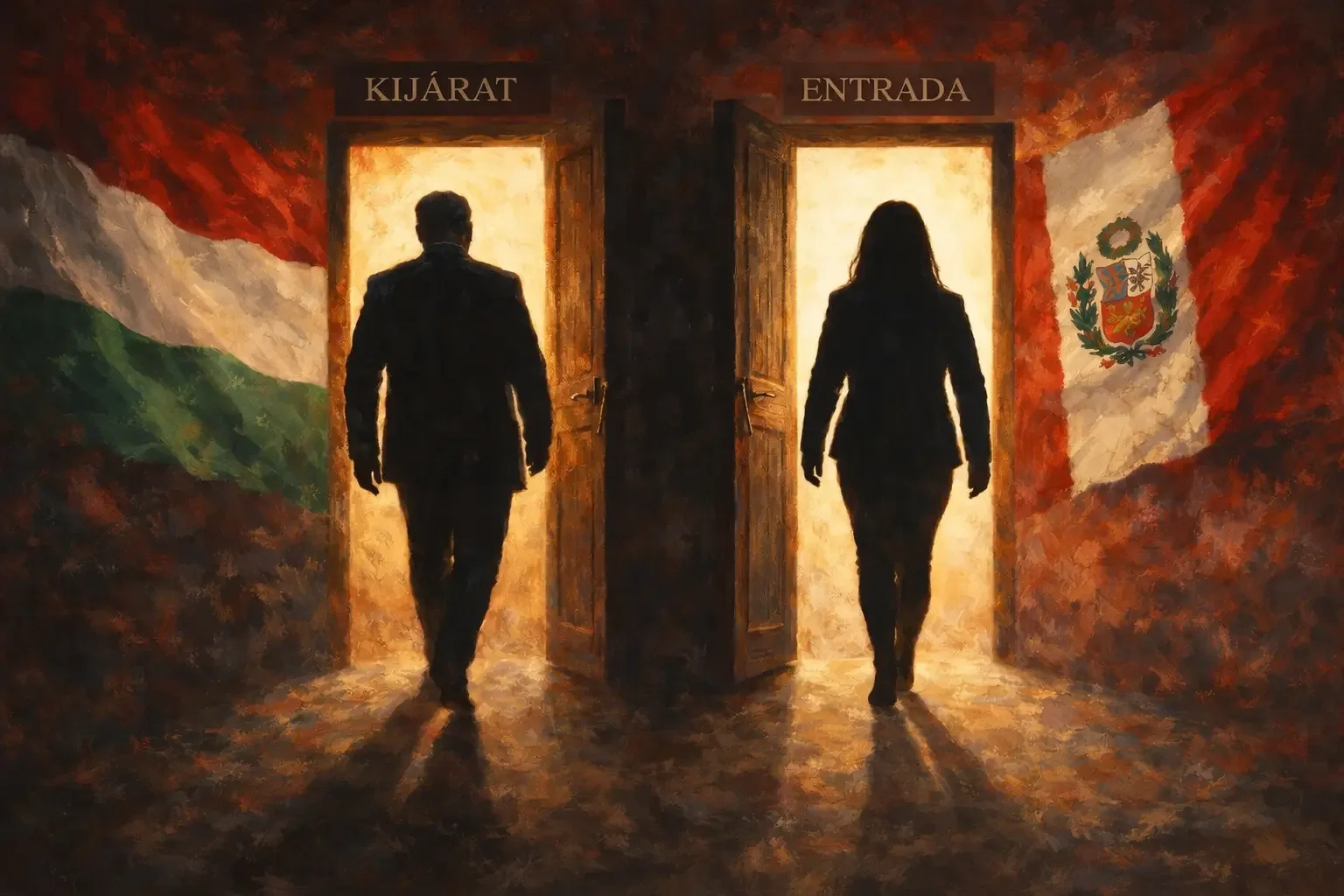
Argentina’s irredentist expansionism over the Falklands is nothing new. But Milei’s confidence that Trump backs him is less about sovereignty and more about punishment for Europe.