
Rabat Sharpens Its Salami Slicer Over Ceuta
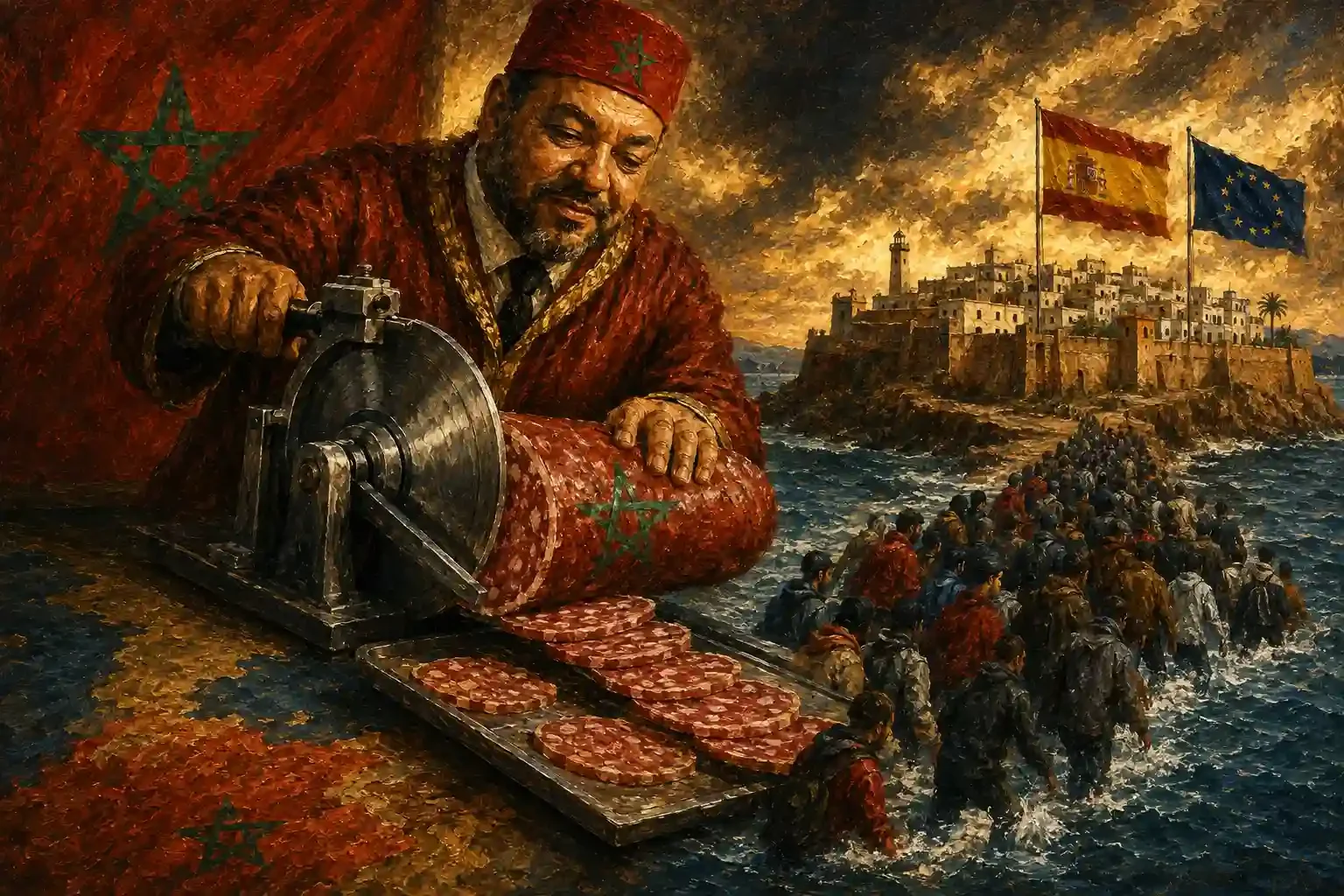
Ceuta’s crisis is not just about territorial and popular sovereignty, but yet another example of the Moroccan regime’s Machiavellian salami-slicing tactics.
The illegal entry of over 60,000 Moroccans into Ceuta was, while shocking, hardly unexpected. The Moroccan regime’s irredentist claims over Spain’s autonomous cities in Northern Africa have been well-declared since its independence and, given past incursions, its respect for Spain’s sovereignty is mostly non-existent anyway. However, since the publication of a US House committee report earlier this year, which openly labelled Ceuta and Melilla as “Spanish-administered cities located in Moroccan territory”, I have suspected that some sort of large scale incursion was to come at some point and in some form. As the diplomatic spats between Spanish PM Pedro Sánchez and US President Trump have persisted over Iran, Israel, and NATO spending, it was probably only a matter of time before Washington would employ its “transactional realism” in reverse, and give Rabat a discreet nod to have at it.
While US involvement is speculative (and probably unlikely this time around), the Moroccan regime’s territorial ambitions certainly aren’t. Despite its supporters’ portrayal of it as the pinnacle of pragmatic stability in the region, I have long contended that Morocco—under monarchical dictator Mohammed ben El Hassan Al Alawi—represents little more than an expansionist entity, fueled by a cold-hearted nationalism and patient Machiavellianism, with little regard for the sovereignty of anyone—including its own people. But, in spite of being the perpetrator of the third longest-running military occupation, the Moroccan regime has not only been ignored by the international community but, mostly, lauded and rewarded for its crimes (mostly from its successful espionage and political blackmail).
The recent migrant surge into Ceuta was not the first that Spain has experienced. In May of 2021, over 8,000 Moroccans crossed the border into Ceuta, triggering a humanitarian and diplomatic crisis in response to the Spanish government providing medical assistance to pro-sahrawi independence activist and Polisario Front leader, Brahim Ghali. For this seemingly innocuous act, the Moroccan regime decided to take great offense, and encouraged its own citizens to enter illegally into Spain, showing its perfect willingness to exploit the ongoing migrant crisis for its own geopolitical aims to pressure Madrid and the rest of Europe, as well as to provide it with plausible deniability.
To add insult to flagrant violations of Spanish sovereignty, the Moroccan regime was also caught having employed significant espionage on European politicians. When the Pegasus Affair broke in July of the same year, following the migrant surge, it was shown that the regime had infected the phones of prominent leaders with the spyware, from Pedro Sánchez, Emmanuel Macron as well as other prominent figures. In the case of Sánchez, it was alleged that Morocco had downloaded up 2.7 GB of data off his phone. While the Moroccan government flatly denied having even used Pegasus, a report that was released only last month showed clear evidence that the Moroccan intelligence agency—the DGST—used it extensively on both domestic political dissidents and on foreign mobile numbers. While the exact content of what they obtained on Sánchez is not known, the consequence of the information was likely the cause of Spain’s sudden abandoning of its traditional support for Western Saharan self-determination and its endorsement of Rabat’s so-called “autonomy” plan in 2022.
While the focus of weaponizing both migration and information has been undoubtedly directed toward legitimizing its illegal occupation of Western Sahara (which has been regrettably successful), the transformation of the international scene by the Second Trump Administration’s own flexibility toward sovereign territory has probably prompted greedy Rabat to think a little bigger. While before, the question of changing borders by force or against popular will was unthinkable, the reality is today that, given the US’s offers to Russia of the Ukrainian territory it has illegally annexed, popular sovereignty is now at the mercy of great powers and the allies they choose to reward. There’s now all the more reason to suspect that Rabat is not only using its leverage over Spain for Western Sahara, but now to make claims on Spanish territory.
This recent migrant incursion into Ceuta was significant because of the sheer numbers. While in 2021, 8,000 was already a large number of people crossing over, the pure extent of having over 60,000 people entering is something much more. While it was probably Sánchez’s visit to Algeria (Morocco’s regional rival), during which the two countries signed an agreement to reset their damaged relations after Spain endorsed the autonomy plan, that Morocco allowed the surge, it is also likely true that this is another slice of the salami from Rabat in its long-term ambition to annex Ceuta and Melilla into its territory.
The use of ordinary people and non-combatants in a sort of hybrid warfare against Spain’s sovereignty is something that we, in Europe, are almost entirely incapable of repelling. As a dictatorship, Morocco is free from concerns of human rights and the lives of its own citizens, and can use its own civilian population—including children—to slowly change the demographic situation on the ground in Ceuta and Melilla; it’s not something it needs to think twice about. Knowing that Spain, and the rest of Europe, are bound by their obligations toward migrants by the European Court of Human Rights (ECHR), the Moroccan regime is free to weaponize this, while any Spanish retaliation will only look like an overreaction. Beyond military power to deter a forceful takeover and sanctions that would deeply hurt both sides if unilateral, Spain is relatively powerless to outpace the Moroccan regime’s patience.
But perhaps the worst fact of this entire crisis has been the weakness of Pedro Sánchez’s government in defending Spanish territory. After many months making himself out to be the strong left-wing leader to oppose Trump on the international scene, Sánchez has revealed himself to be a rather weak loser. Instead of imposing firm, diplomatic repercussions on Rabat, Sánchez instead decided to fall out with Italy after Giorgia Meloni suspended its Schengen Agreement with Spain in the light of the surge. Whether Meloni has reacted rightly or wrongly (although, I would argue, understandably), it has made Spain look weak, not just to its European allies, but also its enemies.
By choosing to further entrench divisions in Europe by responding to Meloni likewise (which he could have simply ignored), Sánchez has again chosen the easy way out to avoid the difficult posturing against the Moroccan government that sees no punishment for abusing Spain’s territorial integrity. Indeed, the only positive that might come out of this crisis is that Pedro Sánchez, while resiliently clinging onto power through corruption scandal after corruption scandal, might finally meet his end due to a crisis of Spanish foreign policy (which has always been what I thought it might take). Since it has been revealed that the Spanish government ignored warnings from military intelligence and failed to employ adequate measures to avoid this crisis, it might finally be the moment where Spaniards will put their foot down on sovereignty and border protection.
All the same, it cannot be denied that the Moroccan regime has, once again, gotten off scot-free. As Europe turns on itself, Rabat has seen that it can cause diplomatic chaos for its democratic neighbors without facing any consequences itself. For one reason or another, we, as democratic countries, are apparently more willing to place harsh measures on each other before coming down hard on the real villain. While it is true that salami-slicing tactics are not easy to counter, the worry of not acting at all should outweigh the risk of being perceived as an overreaction.
Instead of nothing, significant consequences for Rabat over this latest surge should have been direct and accusatory from the get go: Madrid should have immediately summoned the Moroccan ambassador for an explanation as well as threatened to withdraw its endorsement of its autonomy plan, all the while pressuring Rabat to take all its migrants under another threat of European-wide imposed sanctions. As Sánchez has done none of these, his attempt to guilt his European allies by accusing them for a lack of solidarity is deeply ironic. In fact, it’s very much the other way around: Sánchez has increasingly been a thorn in the side of European unity (being generally speaking, more pro-Beijing than pro-Brussels), and taking unilateral actions that affects all of Europe without their consent, such as the mass regularization of irregular migrants in Spain. It is no wonder that the rest of Europe has decided not to show solidarity to someone who clearly hasn’t shown any to them. Perhaps if he had at least tried to prevent this crisis, we would have Europe’s full backing for any measures imposed on the Moroccan regime.
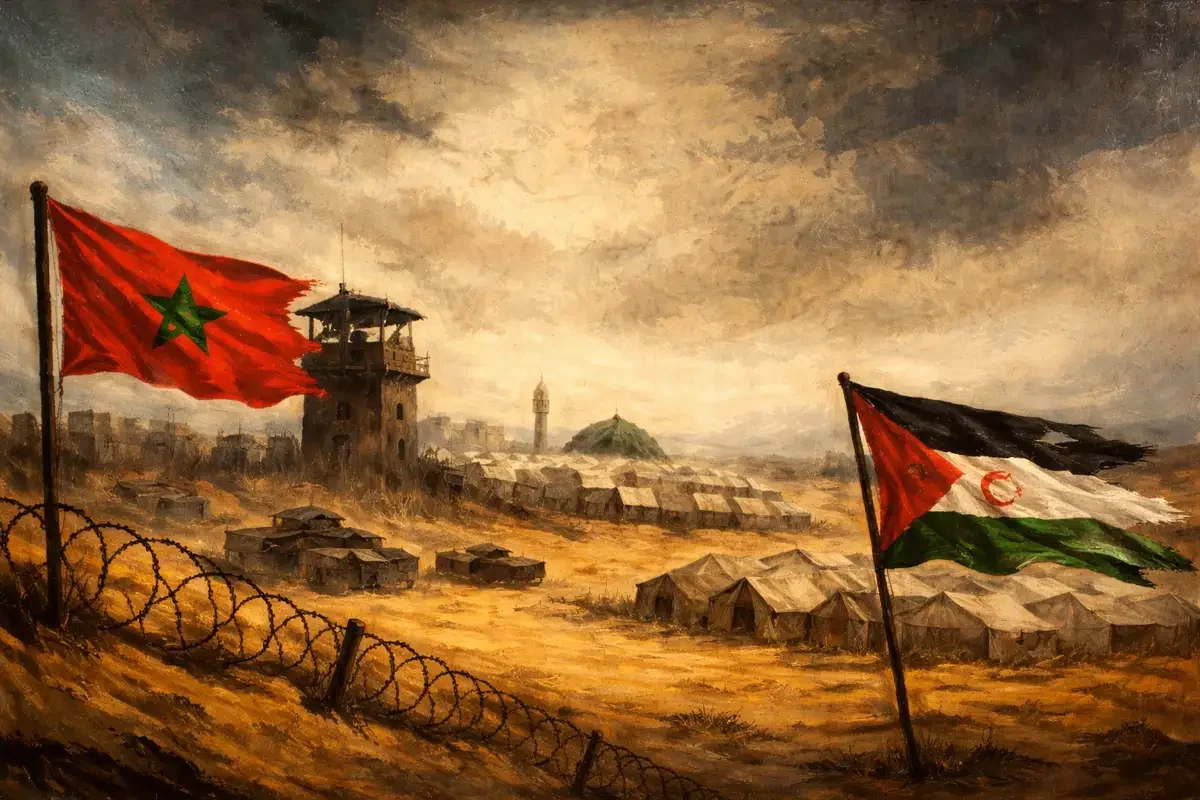
Ceuta’s crisis is not just about territorial and popular sovereignty, but yet another example of the Moroccan regime Machiavellian salami-slicing tactics.