

Makerfield and Reform’s New Problem
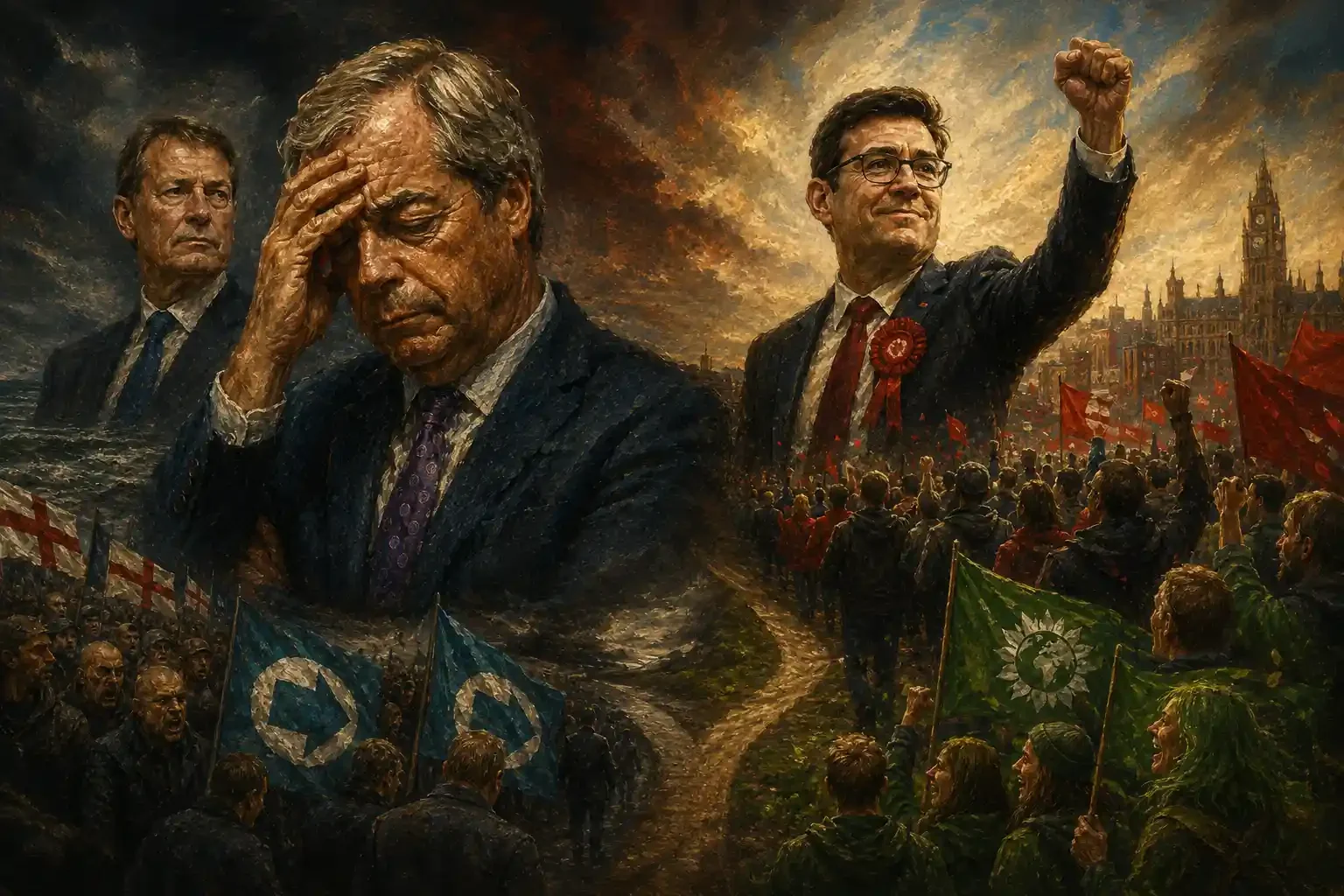
Farage is making the same mistakes as the Conservatives while Restore might end up like the Greens.
Admittedly, the bigger news of the Makerfield by-election result is Andy Burnham’s entry into the House of Commons. The former Manchester mayor is now poised to launch a serious leadership challenge to Keir Starmer and to set off another round of prime ministerial musical chairs. For me though, the other news was not so much the Labour vs. Reform UK duel (which, ultimately, was not that close after all), but instead the weird position that Nigel Farage has now found himself in by no less than an angry ex-member.
While even with Restore Britain’s votes, Reform would still have been short by 6,000 votes to win the seat, there’s no doubt that Rupert Lowe’s harder right-wing splinter party has caused some damage to Reform’s support. Ever since the Restore pressure group finally broke with Reform earlier this year to form its own political party, it has been a substantial headache for Farage and has, ironically, put Reform in the same position that it itself has put the Conservative Party. And Reformers have also been making the same mistakes.
The secret to challenging extremist parties has also been to tactically steal their most reasonable and moderate policies. Many people turn to extremist political parties, despite moderate options existing, out of frustration with a major party’s track record—which is most certainly the case with the Tory Party. These moderate voters vote for these reasonable policies and only tolerate the extremist policies because, unfortunately, it's the only way to get the moderate ones. If you steal those moderate policies, you deprive the extremist party of the moderate oxygen it’s been sustaining the majority of its support on, leaving them with just their extremist policies and voters.
Unfortunately, moderate parties who are threatened by an insurgent challenger tend to do the opposite. Rather than doubling down on the moderate policies, they try to compete with the extremist policies instead, thinking that’s what their voters really want. But rather than winning back support, it results in the moderate party offering an extremism-lite that no one finds convincing and drives even more people away. This is the exact approach that the Conservatives chose to compete with Reform: they adopted the same hard-line immigration policies and the “Stop the Boats” slogan, instead of doubling down on the One-Nation Toryism that had worked reasonably well back in 2019. The Tories thus alienated both their members and their voters, not just from trying to act like Reform-lite, but also because they continued to look incompetent and unoriginal. In truth, I doubt whatever the Tory Party did would have been able to reverse 14 years of failure and that their status as the ex-incumbent was always going to cost them dearly.
But this method of moderate-policy-stealing was something that Nigel Farage has been an undisputed master at. The neofascist British National Party was once the dominant alternative party on the right to the Conservative Party, especially during the late 2000s. While it never gained any seats in parliament, it did have relative success in local elections as well as in the European elections in 2009. The BNP was successful not because people believed in its extremist and racist agenda—which it meticulously, though unsuccessfully, hid from the public—but because it hid it behind articulating reasonable concerns over immigration and multiculturalism. These concerns, raw and uncultured as they were, were still legitimate and had been repressed by the dominant parties for associating them with racist sentiment.
However, when Nigel Farage and his UK Independence Party (UKIP) began seriously contesting elections in the early 2010s, these non-racialist concerns over immigration finally had a voice outside of the racist BNP. UKIP’s civic nationalism approach and Farage’s own crackdown on extremist members in the party starved the BNP of oxygen and allowed concerns over immigration to be discussed more civilly. While it is true that the BNP’s leader Nick Griffin’s famous appearance on BBC Question Time did the party extraordinary damage, UKIP’s tactic (conscious or not) of stealing the BNP’s performative moderate concerns with immigration and leaving them with just their extremist positions helped destroy the BNP at a moment when it could have become a worryingly dominant force in British politics. This feat is something that Farage doesn’t get enough credit for.
The advantage that Farage had at the time, however, was that the early to mid-2010s was only the start of the polarization of UK politics. The increasing political sectarianism over Brexit, catalyzed by the fallout from the COVID pandemic, has made people even more sympathetic to more radical solutions when it comes to solving their concerns. The world where an insurgent party like the Farage-led UKIP could seize a moderate gap in the political market has now probably closed, and extremism has become much more popular as UK politics has continued in its structural interregnum. With the splinter of the right-wing vote in the formation of Rupert Lowe’s Restore Britain, Reform now faces the same threat it poses to the Conservatives, without the environment that helped it defeat the BNP.
Reform UK’s panic over Rupert Lowe’s party is evident in Farage’s new rhetoric. While Reform has usually maintained its messaging in the way of a non-racialist civic nationalism, Farage’s address to the nation following the trial of Henry Nowak’s murderer Vickrum Digwa was a step in the extremist direction. Concern for “white lives” was a step away from Farage’s usual vulgarism about illegal immigration, and was clearly a reactive rhetorical stance to try and win back voters from Rupert Lowe’s Restore. And this pattern was followed in reaction to the harrowing attack in Belfast and the ensuing riots. Reform’s move toward extremism also comes frustratingly at the time when they want to move away from it. Reform has been a challenger not just to the Conservative Party but also to the Labour Party, as many patriotic working-class voters form a strong portion of Reform’s base. However, it would not surprise me that, given Reform’s panicked shift to try and counter Restore, it ended up alienating many of these working voters in Makerfield, handing the victory to Andy Burnham; its much-needed centerward drift has now been reversed by its own electoral anxiety.
Restore Britain represents that hardliner faction that Reform has always had as a liability. Rupert Lowe—who also likely has his own ego-driven reasons for not just bottling up his frustration until Reform won a majority—now probably presents the realest electoral threat to Reform. However, Rupert Lowe funnily faces a similar problem to that of Zack Polanski’s Greens. The desperate need to grow a movement as quickly as you can is leading both party leaders to embrace whatever support they can find at the bottom of the barrel, without sufficient vetting or “quality control”. As the Greens have been permissive in allowing whatever racist or anti-Jewish members in order to swell their ranks, Restore will likely make the same mistake for the right. Already, Lowe has found support from white nationalists and Neo-Nazis alike, which he will find very difficult to counter. Indeed, both Zack Polanski and Rupert Lowe will find themselves in positions where growing extremism in their parties will end up devouring them, simply because they completely lack the experience to be able to deal with it effectively. Again, Nigel Farage’s experienced track record on counter-extremism in all the parties he’s led is a credential that neither Lowe nor Polanski possess.
Argentina’s irredentist expansionism over the Falklands is nothing new. But Milei’s confidence that Trump backs him is less about sovereignty and more about punishment for Europe.