

The Weird Axis of the Anglosphere’s Center-Left
Whatever your opinion of the state of the UK, the decline in its international influence has been the most striking. Though the international media still tends to defer to the UK for its opinions and policy decisions, the reality is that its role as a major player in the world is less evident than ever. This is not a Starmer-phenomenon either but a gradual downward trend in Britain's geopolitical position since the end of the Second World War.
With even France and Germany still maintaining a significant amount of influence in the world, the UK appears to be drifting more toward Spain's position. The clearest example of this has been in the UK's recent formal recognition of the State of Palestine which, even 20 years ago, would have been a bigger deal, but today is seemingly worth just a shrug of the shoulders.
All in all, and taking into account all the indices, Britain's soft power is ambiguous at best, ranking either 3rd or 8th, according to whom you look at.
For some (including myself prior to 2019), one of the ways that the UK could have repositioned itself more clearly as a global actor was through the theoretical formation of a Commonwealth Union, or CANZUK. Indeed, this could have been a main motivation for leaving the European Union in 2016. Freed from Brussels' shackles, the UK could have taken advantage of its imperial legacy and formed a free-trade and political bloc with Canada, Australia and New Zealand, adding other Commonwealth members along the way, with varying degrees of integration. The UK was always the missing link for this possible third pillar of the West to take shape, but it has never taken much action over it. Even when the Tories were in power, the chant of "Global Britain" heralded converting Britain into some European Singapore, rather than an active force in shaping the world; rather than some vague global role, Britain could have chosen a truly internationalist role.
That being said, some Commonwealth solidarity has emerged. The threats toward Canada's sovereignty from its southern neighbor have pushed it to seek out more like-minded partners in the UK and the EU, away from US influence. The angry turn of Trumpist America from friend to aggressor only highlights the painful truth that over-relying on a single sovereign state has not been a wise move, as the Europeans have learned with Ukraine. Indeed, many Atlanticists who feel hurt and betrayed by the US's appeasement of the Russian dictatorship have been pushing CANZUK even harder in defense of Canada and as an alternative bloc to compete with both the US and China.
And in fact, Churchill's vision for the "three majestic circles" of the West in the US, EU and the Commonwealth is still realizable under Prime Minister Keir Starmer, albeit in a weird way.
For their individual reasons, these four key Commonwealth countries—who share so much in language, history, culture, as well as a monarch—never seem to be able to get their political ducks in a row. During the 14 years that the British Conservative Party was in power, only the Liberal Party in Australia was ideologically aligned. Both in Canada under Justin Trudeau and New Zealand under Jacinda Ardern, CANZUK was divided politically. However, with the election of Anthony Albanese in Australia in 2022, three out of four found themselves governed by a center-left party, leaving only the Tories in the UK. Yet this was short-lived, as Ardern resigned in January 2023 and the Chris Luxon New Zealand National Party won the general election in October, returning to the right-left pair prior to Albanese's election. However, with the landslide victory of the British Labour Party under Keir Starmer in 2024, it looked like the missing link was finally lining up with the rest of the CANZUK nations.
While it is the case that the main supporters of Brexit and closer Commonwealth ties in the UK have been from the right and the only major party to formally endorse CANZUK has been the Canadian Conservative Party, the truth is that this form of internationalist alliance has always been a more likely policy of the center-left. Indeed, Mark Carney has expressed his alignment with CANZUK goals and other smaller parties have done the same. If the British Labour Party could have reshaped the calamitous British exit from the EU, it could have been in the form of internationalism from a new paradigm. And, in some weird ways, it does seem to be emerging as an axis of the center-left in the Anglosphere.
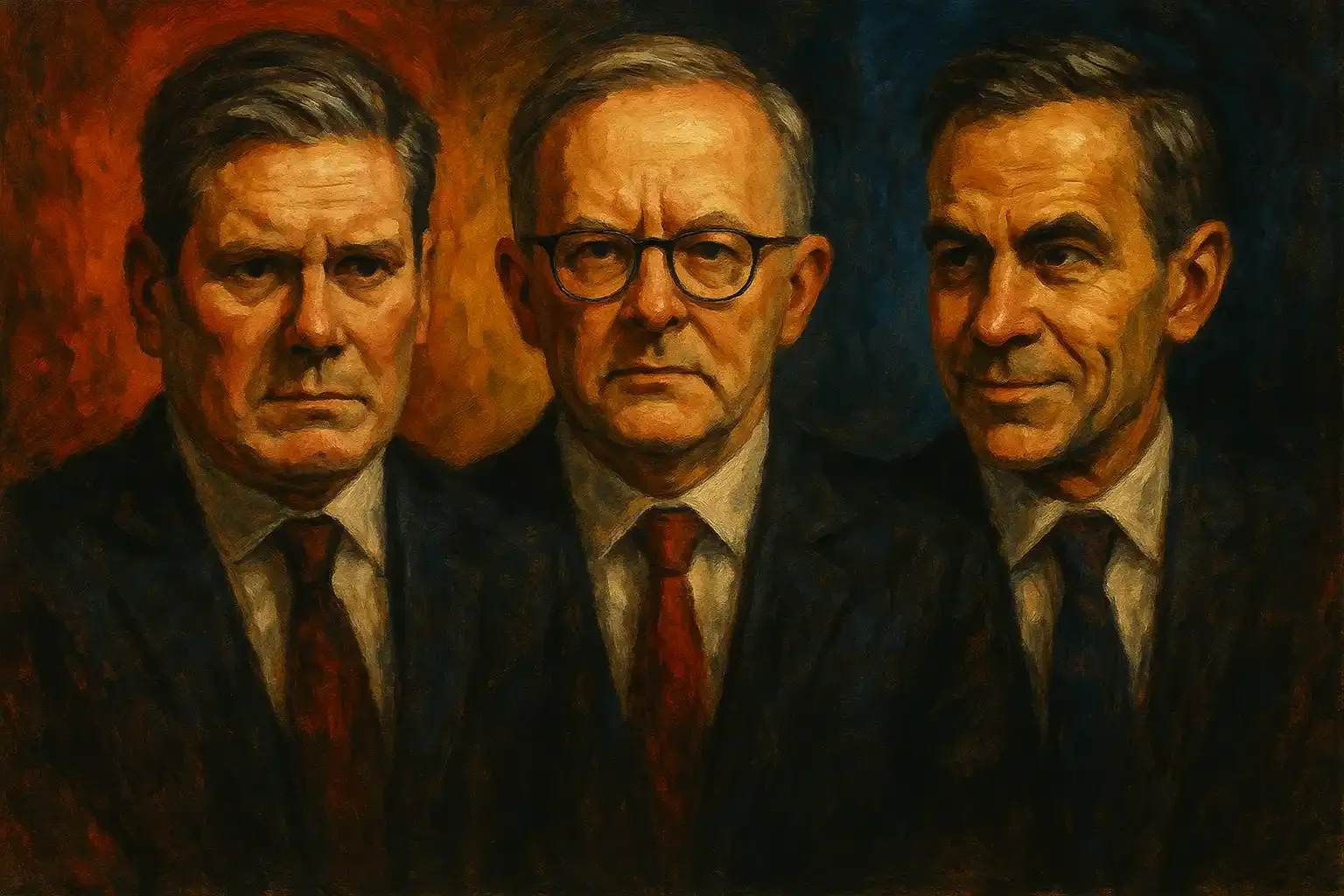
These three middle-aged men, Starmer, Albanese and Carney, have, by sheer luck of their circumstances, been given an opportunity to create something that could, amongst other things, prove me wrong about their ability to take an active role in the world. Perhaps it could be from mere coincidence and political alignment that they could forge an alternative to the US bellicose and alienating attitude.
Argentina’s irredentist expansionism over the Falklands is nothing new. But Milei’s confidence that Trump backs him is less about sovereignty and more about punishment for Europe.