

Let’s Not Give Up on Myanmar
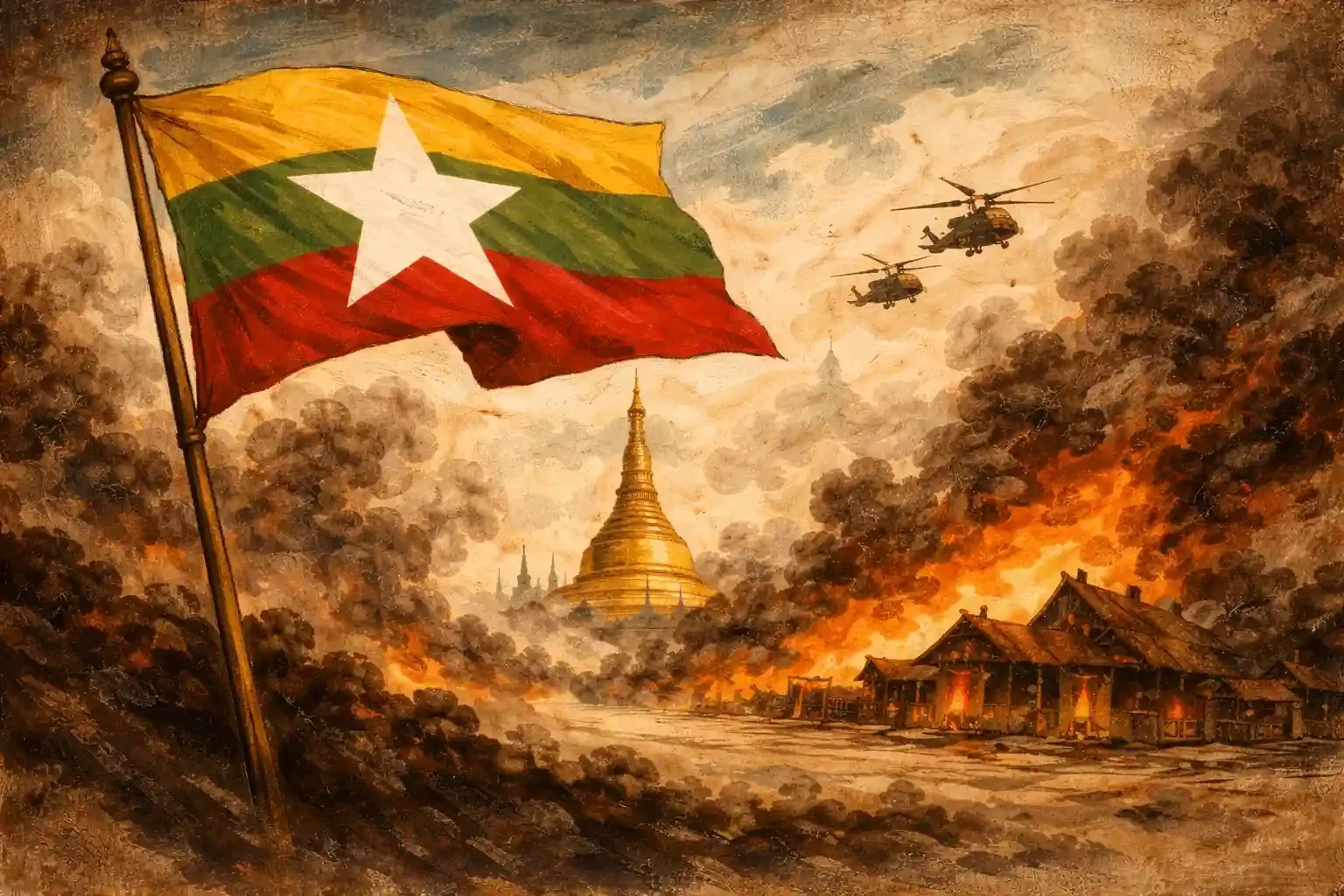
As the first Myanmar election since 2021 unfolds in the beleaguered Southeast Asian country, it's worth a quick thought for the democracy movement that continues to battle against the fascistic Tatmadaw. As the civil war between anti-junta forces, led by the National Unity Government (NUG), and the military dictatorship begins to stall, the lack of awareness over the conflict is perhaps one of the great failings of the Western press in recent years.
While attention has been (and rightly) focused on Ukraine and Gaza, the extent of the humanitarian crisis in Myanmar has been proportionally just as bad, if not worse. From the ethnic cleansing and genocide of the Rohingya in Rakhine state, leading to the displacement of over 1.1 million people settling as refugees in neighboring Bangladesh, to the widespread destruction and indiscriminate attacks on civilians, the Tatmadaw has been the author of extreme human rights abuses and war crimes.
The war has been mostly ignored in the West. Despite significant media attention diverted onto former State Counsellor and democracy advocate Aung San Suu Kyi for her seeming indifference to the plight of the Rohingya in 2015, the war has rarely been reported on in main news bulletins. This, in the face of more accessible conflicts, has also been due to the fact that many perceive the conflict as unimportant for Western interests. Indeed, the main players in the conflict—China, India, Thailand, and Russia—notably do not include the US, whose engagement has been lukewarm at best.
In fact, apart from formally recognizing the Rohingya genocide back in 2022during the Biden administration, the US has done next to nothing. This, of course, has been yet another symptom of the US's waning influence in the world, as the States has preferred to hand over the future of Myanmar to China (as it did with Afghanistan) instead of providing the NUG with the proper extensive military support it needs to bring down the Tatmadaw once and for all. US influence and support could have tipped the balance toward consolidating a constitution on democratic terms, rather than the current stalemate. It could have also led to putting Tatmadaw leaders on trial for genocide and crimes against humanity.
US influence could also have tamed the nastier elements in the anti-junta forces. While the reality of an ethnic-based federation is unfortunately perhaps the only route forward for Myanmar if it hopes to a) stay together and b) be a democracy, this doesn't mean that more Western involvement couldn't have led to more accountability toward some of the ethnic armed organizations (EAOs). The Arakan Army stands out in this, but this discipline could have been better applied to NUG-allied forces such as the People’s Defence Forces (PDF).
As Myanmar goes to what is widely considered to be an unfree and unfair election to justify the military's continued grip, raising awareness of the conflict is still paramount; the Burmese democracy movement is on the front lines of the war against tyranny, and we should support it out of both a moral imperative and strategic necessity.
A democratic Myanmar is without question in our interests.
As Myanmar faces a sham election under military rule, its ignored and brutalised democracy movement fights a war the world cannot afford to forget.